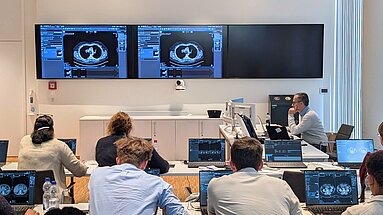
Successful “RECIST and Beyond” Workshop in Cologne: Advancing Precision in Oncologic Imaging
How can complex tumor findings be assessed accurately, reproducibly, and in line with clinical guidelines?
GoTo
How can complex tumor findings be assessed accurately, reproducibly, and in line with clinical guidelines?
GoTo
Tumor response assessment in neuro-oncology clinical trials requires careful attention to measurement protocols and confirmation scan requirements. To address evolving research needs and standardize…
GoTo
Hepatocellular carcinoma (HCC) is a potentially deadly tumor. The decisive factor is the timing of diagnosis: if HCC is detected early, there is a chance for complete removal and, in the best case,…
GoTo
Modern radiology faces a central question: how can imaging and clinical data be combined in a way that leads to more precise diagnoses, better-informed decisions, and more individualized…
GoTo
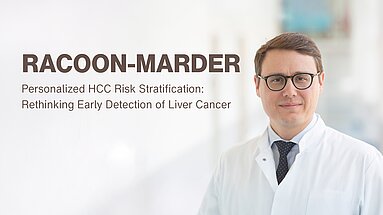
Hepatocellular carcinoma (HCC) is often diagnosed too late, limiting treatment options and survival. The RACOON-MARDER project aims to change that. By combining MRI imaging, clinical data, and…
GoTo
mint Lesion's Research Suite is an advanced imaging research platform designed to support academic teams in streamlining and scaling their imaging studies across single or multiple centers. Built to…
GoTo
How are structured reporting and artificial intelligence transforming radiology practice? Prof. Dr. Thorsten Persigehl from University Hospital Cologne shares how mint Lesion makes prostate…
GoTo
Rare tumors, major challenges: The RACOON-SAGA project explores how imaging and clinical data can improve the pre-therapeutic characterization of soft tissue sarcomas. In this interview, Dr.…
GoTo
What does radiology look like when structured reporting meets artificial intelligence? A look into the daily practice of Prof. Dr. Thorsten Persigehl reveals the answer.
GoTo
Sarcomas are rare tumors that pose particular challenges to both medicine and research. Their heterogeneity makes precise diagnostics difficult, which directly affects therapy decisions.
GoTo