jump to content jump to footer
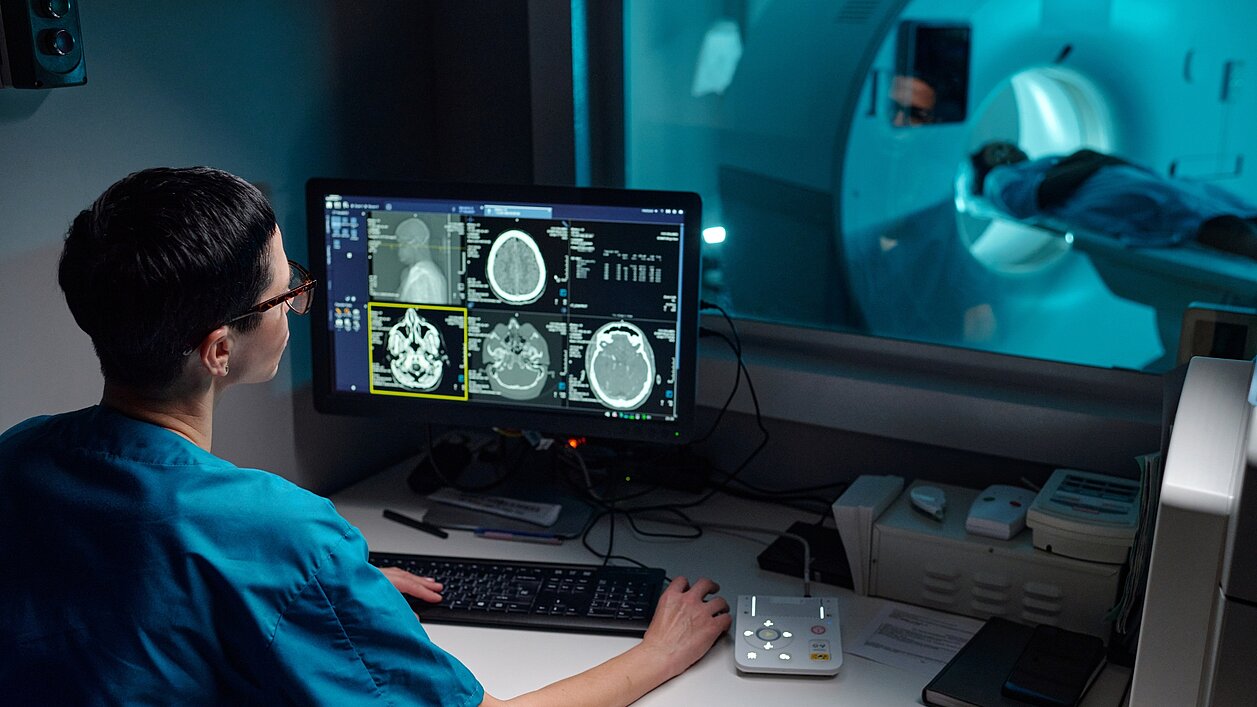
Medical professional reviewing patient's MRI images on computer monitor with patient in MRI machine in background.

Postoperative Brain MRI After Tumor Resection: Reducing Artifacts and Improving Diagnostic Accuracy

Postoperative MRI after brain tumor surgery is often affected by artifacts caused by intracranial air, limiting reliable image interpretation.

A recent study shows that TGSE-BLADE DWI significantly reduces image distortion compared to standard RESOLVE techniques.

Using mint Lesion for quantitative analysis, researchers demonstrated near-perfect agreement with T1-weighted reference scans—resulting in improved diagnostic confidence in postoperative imaging.

What are the implications for clinical practice?

Woman watching the Mint Medical and contextflow webinars on lung cancer screening in Germany on Youtube
Webinar series to explore different aspects of lung cancer screening in Germany
Webinar Series: Lung Cancer Screening in Germany - From Evidence to Implementation
Lung cancer remains one of the leading causes of cancer-related mortality worldwide. In Germany, the introduction of a national lung cancer screening…
Read more
Centralized Management for Clinical Trial Communications and Workflows
Requests for radiological clinical trial evaluations frequently rely on fragmented methods such as emails, phone calls, and spreadsheets. This…
Read more
mint Lesion usage during a clinical trial read, featuring the TGRM export tool.
Bridging the Gap Between RECIST and Survival: Why the FDA’s Analysis of the g Value is a Game-Changer
For decades, oncology trials have relied on RECIST 1.1 to evaluate drug efficacy. However, these categorical "snapshot" evaluations do not always…
Read more
scroll-top