jump to content jump to footer

Categories: Therapy Response Assessment

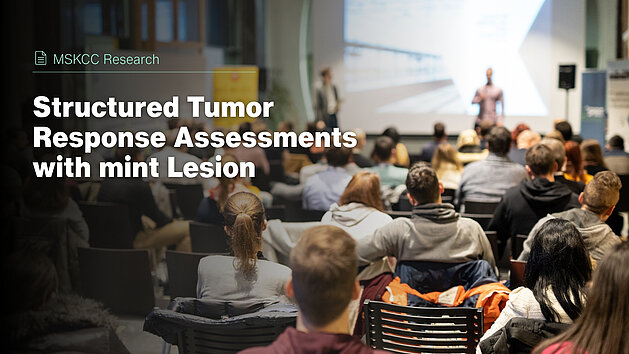
Research poster presentation on standardized tumor response assessments using mint Lesion at the NCCN Annual Conference 2026
Presentation of a research poster by Memorial Sloan Kettering Cancer Center on the use of mint Lesion for structured tumor response assessments and clinical research workflows.
NCCN 2026: Memorial Sloan Kettering Cancer Center Presents Research on Structured Tumor Response Assessments with mint Lesion
Big congratulations to Steven Philemond and Alison Chiaramonte of Memorial Sloan Kettering Cancer Center for presenting their research poster “Use of…
Read more
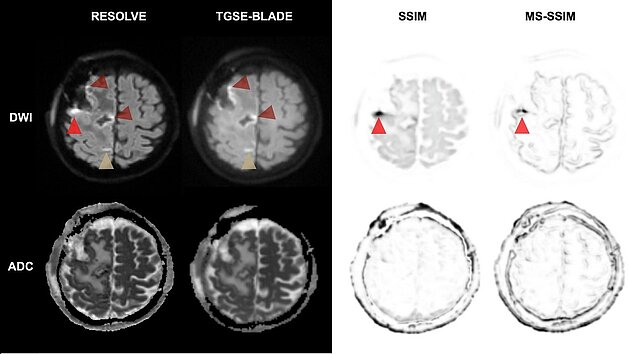
Postoperative brain tumor MRI comparing TGSE-BLADE and RESOLVE DWI showing distortion reduction near resection site
A recent study published in the European Journal of Radiology compares TGSE-BLADE DWI with RESOLVE DWI in postoperative brain tumor imaging. TGSE-BLADE demonstrated significantly reduced geometric distortion and artifacts caused by intracranial air, enabling more accurate detection of ischemic changes and improving diagnostic confidence in early postoperative MRI.
University Hospital Tübingen: Improving Postoperative Brain Tumor MRI: TGSE-BLADE vs. RESOLVE DWI
Early MRI scans are critical for patients who have just undergone brain tumor resection to evaluate the surgery's success and plan future treatments.…
Read more
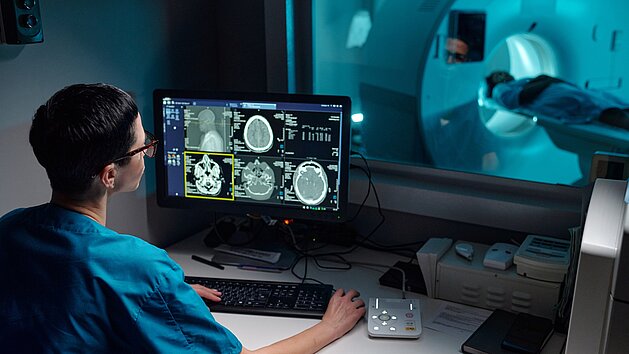
Medical professional reviewing patient's MRI images on computer monitor with patient in MRI machine in background.
TGSE-BLADE demonstrated significantly reduced geometric distortion and artifacts caused by intracranial air, enabling more accurate detection of ischemic changes and improving diagnostic confidence in early postoperative MRI.
Postoperative Brain MRI After Tumor Resection: Reducing Artifacts and Improving Diagnostic Accuracy
Postoperative MRI after brain tumor surgery is often affected by artifacts caused by intracranial air, limiting reliable image interpretation. A…
Read more
scroll-top