"It's a paradigm shift." This is how Prof. Ulf Teichgräber, Director of the Institute of Diagnostic and Interventional Radiology at the University Hospital Jena, describes the improvement in communication with sponsors and CROs through the use of mint Lesion™. Together, Ms. Laura Graziani, study coordinator, Ms. Elisabeth Lammers, study assistant/MTRA, and Prof. Teichgräber describe their journey towards a successful clinical trial center that can now manage up to 40 clinical trials simultaneously.
Where results previously had to be painstakingly entered into Excel spreadsheets, mint Lesion™ has taken over the evaluation of all findings since its introduction in 2015, thus increasing the objectivity and validity of the study results.
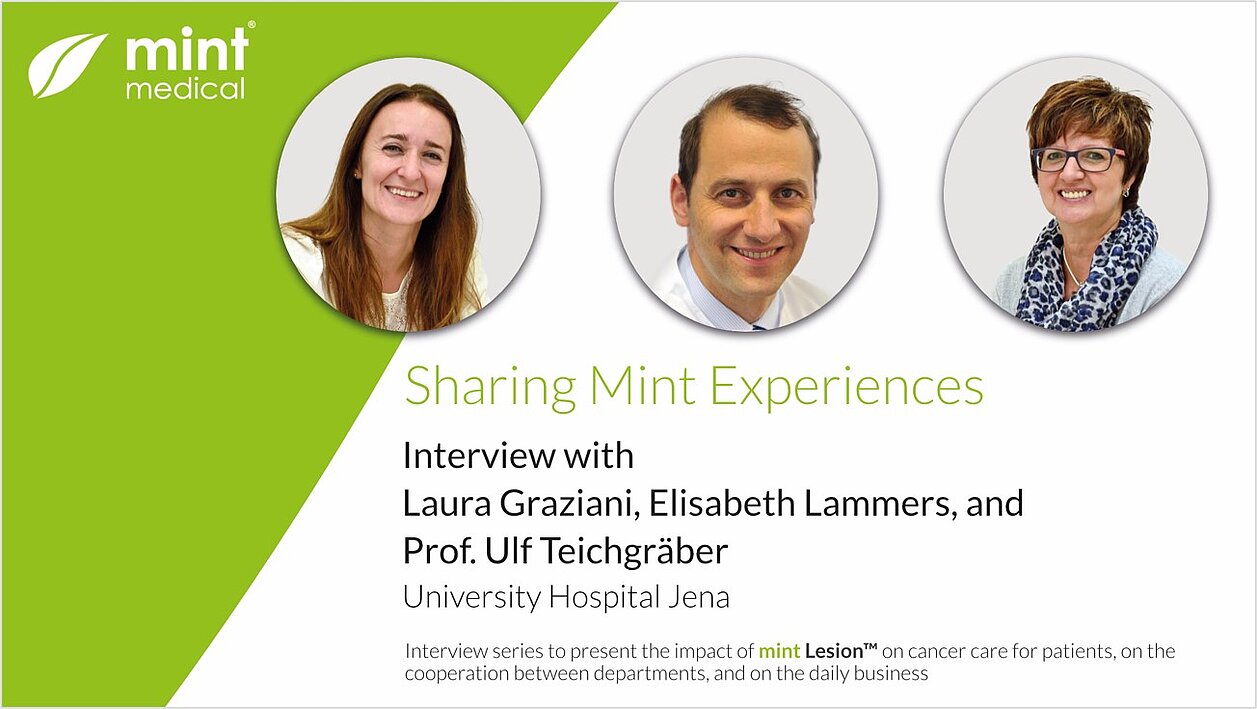
Workflow optimization, increased efficiency and reduced errors in clinical trials
Related Resources
Lung cancer screening: cooperation for efficient processes and digital networking
Heidelberg, September 15, 2026 – In close collaboration with two second-reader centers in Heidelberg and 25 outpatient radiology screening providers,…
Read more
Interview with PD Dr. med. Thi Dan Linh Nguyen-Kim: Structured Reporting in Clinical Practice
In this interview, PD Dr. med. Thi Dan Linh Nguyen-Kim, Head of Department and Institute Director of Radiology and Nuclear Medicine at Stadtspital…
Read more
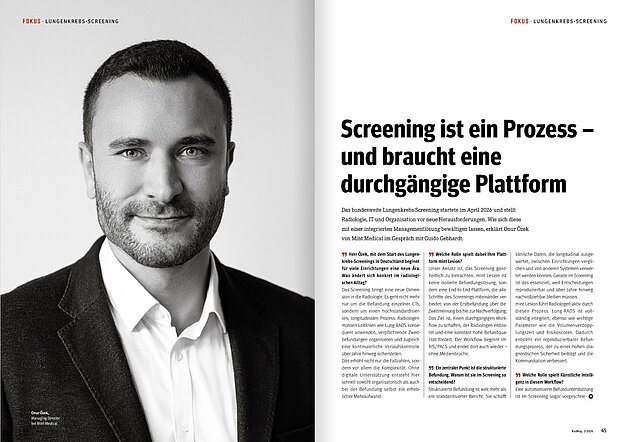
RadMag Special Edition: Onur Özek on the Challenges of Lung Cancer Screening in Germany
With the nationwide rollout of Germany’s lung cancer screening, radiology providers are facing new challenges. Structured reporting, mandatory second…
Read more