The Knowledge Hub for Medical Imaging Professionals: Transforming Radiology with Structured Reporting, Data-Driven Approaches and Multicentric Research

Access breakthrough research, innovative case studies and collaborative projects advancing radiology worldwide. Dive into our activities and product updates, and learn who we are as a company and as a team.

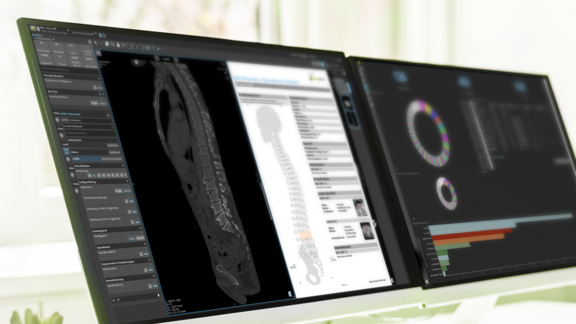
Radiologist using for medical image analysis

Advancing Real-World Federated Learning in Radiology

Federated Learning (FL) enables collaborative model training without data centralization – a crucial aspect for radiological image analysis where privacy regulations would otherwise hinder the use of centralized data lakes. Despite its promise, however, FL has largely been confined to simulated environments.

This study aims to bridge the gap between simulated and real-world FL research by developing an FL infrastructure within the German Radiological Cooperative Network (RACOON), a project by the Netzwerk Universitätsmedizin (NUM).

Using mint Lesion™ to process radiological images, the study’s results show FL outperforms these methods, underscoring its value in practical applications. The study also provides a guide for establishing FL initiatives, highlighting strategic organization and robust data management to aid future researchers in implementing FL in clinical settings.

Read more about the study here.

Related Resources

Related Resources

A computer screen shows the user interface of mint Lesion™  on which the analytical evaluation of a scan can be seen

Brainlab and Mint Medical Enter Cooperation with the German Society for Orthopedics and Orthopedic Surgery

Today Mint Medical together with Brainlab entered into a cooperation with the German Society for Orthopedics and Orthopedic Surgery (DGOOC) and its…

Radiological Cooperative Network (RACOON)

RACOON - What's Next?

Since mid-2020, mint Lesion™ has been successfully used within the Radiological Cooperative Network (RACOON), in the University Medicine Network which…

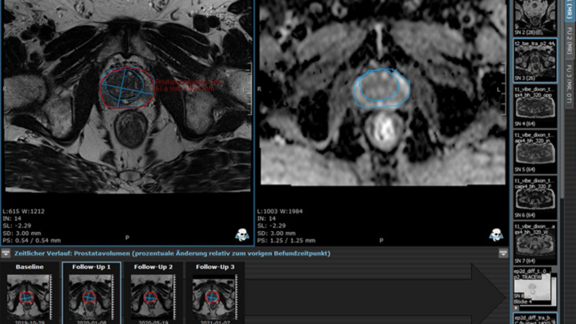
LMU Munich: Prospective study shows the suitability of a semi-automatic approach to assess changes in prostate MRI after prostatic artery embolization

A prospective, monocentric study [1] conducted by Vanessa F. Schmidt and her colleagues at the University Hospital Munich (LMU) evaluated the…