Potential of longitudinal data from single site and multi-center clinical trials for AI-research

Prof. Dr. Hans-Christoph Becker from Stanford University, a long-standing user of mint Lesion™, shares his experience of using the software in this brief interview. He talks about the reaction he received when sharing the mint report for the first time, how patients benefit from the longitudinal overview of disease, and his plans to use the structured data for AI research.

Click here or on the image above to watch the full video on YouTube.
Related Resources

Related Resources

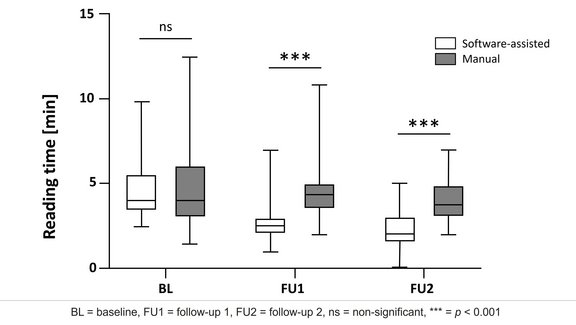
Diagram that shows reduced reading times for the mint Lesion™ approach at both follow-ups.

UKE Hamburg: Study Shows that Software-Assisted Assessments Enhance iRECIST Evaluation

This research study [1] aimed to compare the feasibility and reliability of manual versus software-assisted assessments of computed tomography (CT)…

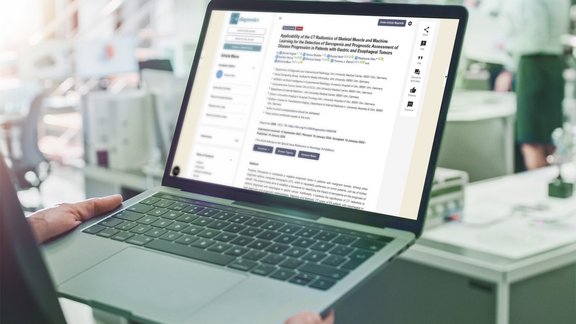
Someone reading a scientific publication on CT Radiomics, sarcopenia, gastric or esophageal cancer

CT-Radiomics unveils insights into sarcopenia's impact on esophageal and gastric cancer prognosis

Analyzing 83 patients with contrast-enhanced CT scans, University Hospital Ulm researchers tracked the prevalence of sarcopenia at different time…

A picture of Prof. Dr. Thorsten Persigehl next to a quote on the importance of mint Lesion™ for radCIO

Challenges and Opportunities of Setting Up a Comprehensive Oncological Imaging Database

In an exclusive interview with Prof. Dr. Thorsten Persigehl, a leading expert in Oncological Imaging, we delved into the transformative radCIO project…