jump to content jump to footer

Structured Reporting Improves TNM Classification Accuracy and Radiologist Satisfaction

In a collaborative, multi-center study, radiology experts developed and validated in mint Lesion a software-assisted structured reporting (SR) framework for non-small cell lung cancer (NSCLC) staging.

Findings revealed that SR significantly improved TNM classification accuracy, reducing common errors in T-, N-, and M-staging compared to traditional free-text reports. Radiologists using SR were more likely to classify cases correctly and rated the tool highly for enhancing report quality, completeness, and interdisciplinary communication. This study suggests that SR may not only improve clinical accuracy but also support data standardization for future lung cancer research.
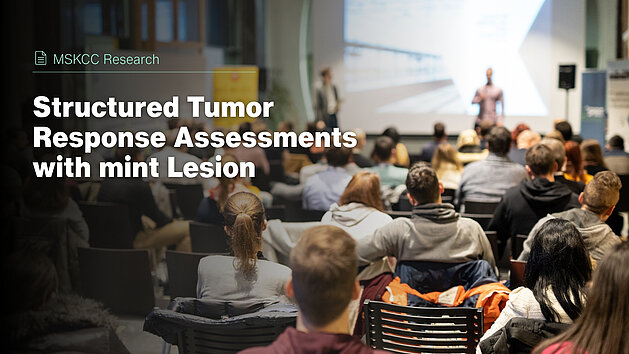
Read a summary of the study here.

Image of a patient getting an MRI scan, signifying how RACOON projects in Germany show how imaging, structured reporting, and AI jointly advance clinical research.
Overview of major RACOON projects in radiology and clinical research.
RACOON – Imaging, Data & Collaboration for Better Decisions

Modern radiology faces a central question: how can imaging and clinical data be combined in a way that leads to more precise diagnoses,…

Read more
Interview with Prof. Timm Denecke about the RACOON-MARDER project and AI-powered early detection of liver cancer using MRI
An in-depth interview with Prof. Timm Denecke about the RACOON-MARDER project
Rethinking Early Detection: How RACOON-MARDER Aims to Spot Liver Cancer Sooner

Hepatocellular carcinoma (HCC) is often diagnosed too late, limiting treatment options and survival. The RACOON-MARDER project aims to change that. By…

Read more
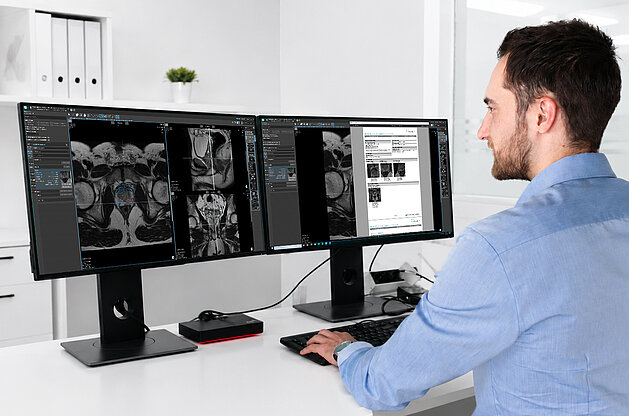
Image of doctor looking at a prostate in mint Lesion.
Prof. Dr. Thorsten Persigehl from University Hospital Cologne discusses the use of structured reporting and AI in prostate diagnostics with mint Lesion.
Structured Reporting and AI in Radiology: Efficiency and Quality in Prostate Diagnostics

How are structured reporting and artificial intelligence transforming radiology practice?

Prof. Dr. Thorsten Persigehl from University Hospital…

Read more
scroll-top