jump to content jump to footer
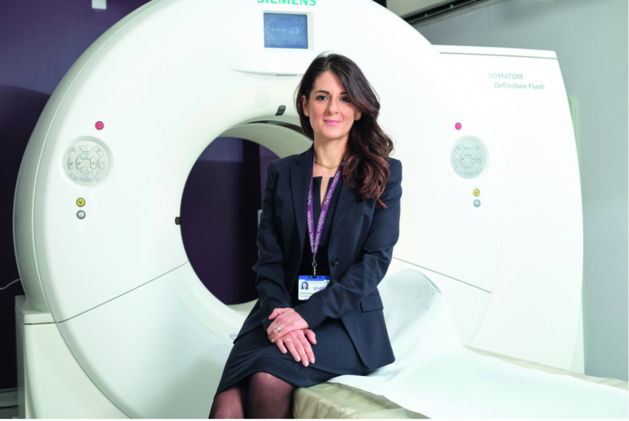
Image of doctor looking at a prostate in mint Lesion.

Structured Reporting and AI in Radiology: Efficiency and Quality in Prostate Diagnostics

How are structured reporting and artificial intelligence transforming radiology practice?

Prof. Dr. Thorsten Persigehl from University Hospital Cologne shares how mint Lesion makes prostate diagnostics more efficient, precise, and connected — and why structured data have become indispensable in his daily routine.


 

Read the full interview here.

Radiologist analyzing whole-body MRI scans of prostate cancer bone metastases using AI-assisted tumor load quantification in mint Lesion
How mint Lesion supports radiologists in AI-assisted tumor load quantification for bone metastases in prostate cancer with structured analysis, objective metrics, and longitudinal therapy assessment.
AI-Supported Tumor Load Quantification for Bone Metastasis in Prostate Cancer
To assess treatment response in patients with advanced prostate cancer, radiologists rely on advanced medical imaging. Conventional modalities, such…
Read more
Radiologists participating in a hands-on lung cancer screening workshop using structured reporting software mint Lesion at RÖKO 2026
Interactive hands-on workshop on lung cancer screening according to G-BA guidelines at RÖKO 2026, including structured reporting, double reading workflows, and consensus decision-making
Hands-On Workshop Lung Cancer Screening: From Initial Read to Consenus
From initial read to consensus – structured reporting in practice at RÖKO 2026
Read more
Radiologist analyzing whole-body MRI scans of multiple myeloma using AI-assisted quantification in mint Lesion
How mint Lesion supports radiologists in AI-assisted quantification of bone involvement in multiple myeloma with structured analysis, objective metrics, and longitudinal disease tracking.
AI-Supported Quantification of Bone Involvement in Multiple Myeloma
Radiologists utilize Whole-Body MRI (WB-MRI) as an established imaging method for multiple myeloma staging [1,3]. Because it avoids ionizing…
Read more
scroll-top