jump to content jump to footer
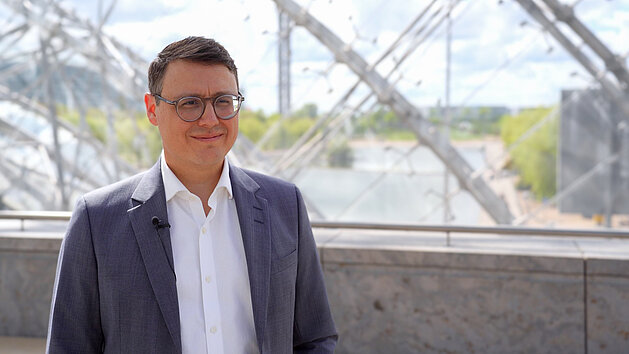
Interview with Prof. Timm Denecke about the RACOON-MARDER project and AI-powered early detection of liver cancer using MRI

Rethinking Early Detection: How RACOON-MARDER Aims to Spot Liver Cancer Sooner

Hepatocellular carcinoma (HCC) is often diagnosed too late, limiting treatment options and survival. The RACOON-MARDER project aims to change that. By combining MRI imaging, clinical data, and AI-based risk stratification, researchers hope to identify high-risk patients earlier and enable personalized, intensified surveillance beyond what traditional ultrasound can offer.

In this interview, Prof. Dr. Timm Denecke (University Hospital Leipzig) explains how AI can make the invisible visible - and why the RACOON infrastructure is key to advancing liver cancer research.
Read more.

Radiologists working at workstations analyzing real CT images during an interactive RECIST workshop at ECR 2026
Insights into hands-on RECIST training at ECR 2026: interactive workshops, real cases, and structured reporting with mint Lesion
From Theory to Practice: Hands-On RECIST Training at ECR 2026
This year, Mint Medical contributed to multiple program highlights at the ECR 2026 - bringing together innovation, education, and real-world clinical…
Read more
Woman watching the Mint Medical and contextflow webinars on lung cancer screening in Germany on Youtube
Webinar series to explore different aspects of lung cancer screening in Germany
Webinar Series: Lung Cancer Screening in Germany - From Evidence to Implementation
Lung cancer remains one of the leading causes of cancer-related mortality worldwide. In Germany, the introduction of a national lung cancer screening…
Read more
From PCWG3 to PCWG4: Evolving Standards in Prostate Cancer Clinical Trials
The Prostate Cancer Working Group 4 (PCWG4) updates and extends the recommendations of PCWG3 to reflect a patient-centric approach, the emergence of…
Read more
scroll-top