jump to content jump to footer

Early Detection of Treatment Response in Lung Cancer Using Delta-Radiomics Features

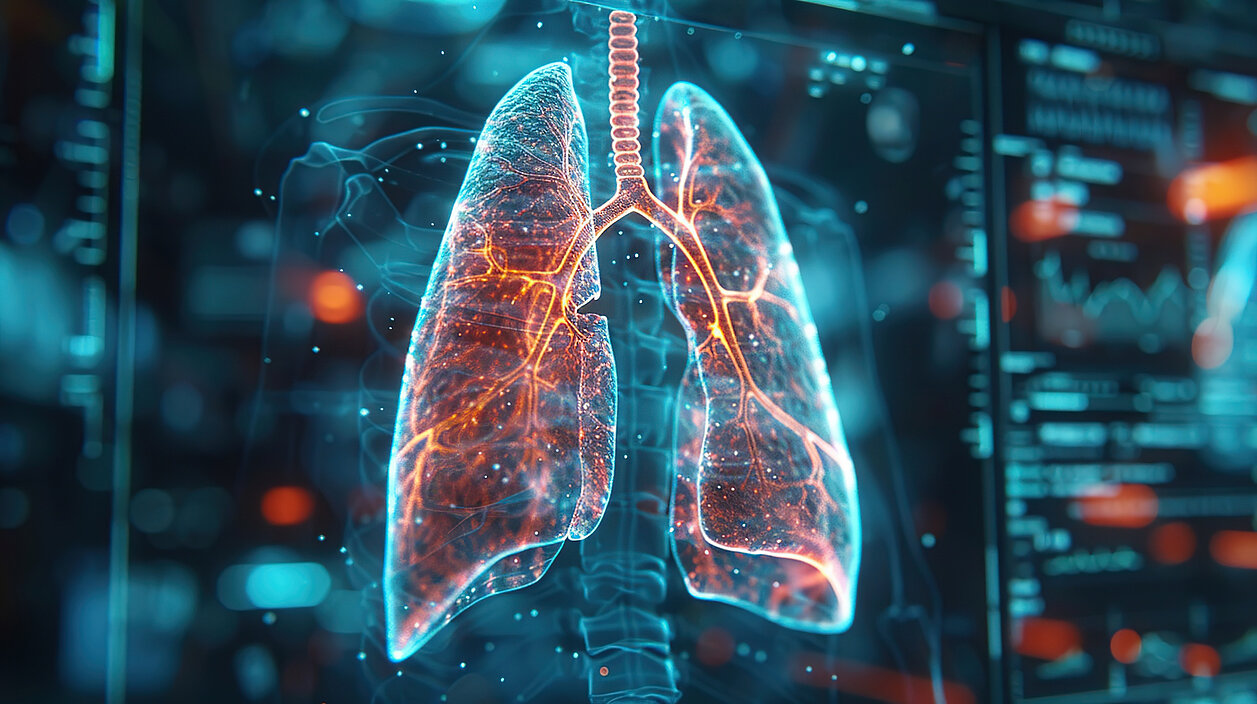
The study conducted by Heidelberg University Hospital investigates the use of diffusion-weighted MRI (DWI) to predict early treatment outcomes in patients with advanced lung adenocarcinoma. The researchers analyzed changes in radiomic features derived from ADC (Apparent Diffusion Coefficient) maps in 144 patients who were treated with either tyrosine kinase inhibitors (TKI) or platinum-based chemotherapy (PBC).

The study found that radiomic features, known as delta-radiomics features (DRFs), were able to predict treatment success and progression-free survival (PFS) as early as 14 days after the start of treatment.

These features enabled the distinction between patients with likely better and worse treatment outcomes.

The use of DWI-based radiomics shows promising potential for early decision-making in lung cancer treatment and could allow physicians to adjust therapies more quickly.

This approach offers a non-invasive, radiation-free alternative for early assessment of treatment success in lung cancer.
Read more about the study here.

Insights into the BZKF BORN-Project – Interview with Dr. Mandy Wahlbuhl-Becker

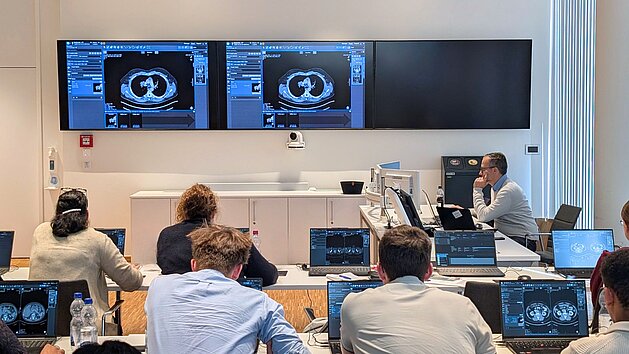
The Bavarian Oncological Radiology Network (BORN) is enhancing cancer diagnostics in Bavaria through standardized imaging and structured reporting. 

Read more
RACOON-RESCUE is Advancing Pediatric Non-Hodgkin Lymphoma Care

Pediatric Non-Hodgkin Lymphoma (NHL) is the fourth most common tumor in children and adolescents, yet its radiological methods lack standardization,…

Read more
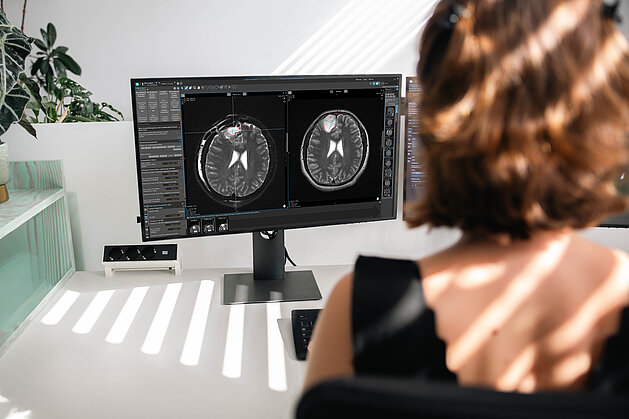
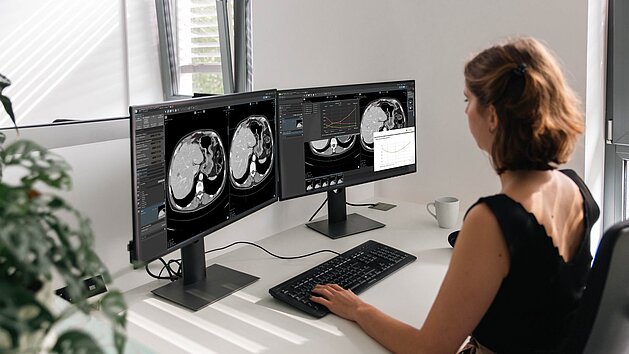
Radiologist creating a structured report with mint Lesion software
Structured reporting is redefining radiology by standardizing documentation, enhancing clarity, and generating data ready for clinical use and AI applications. With mint Lesion, radiologists can work efficiently while producing high-quality, interoperable data that support diagnostics, research, and patient outcomes.
Structured Reporting in Radiology: Precision, Clarity, and Data Quality

Radiology reports are often the key to a diagnosis – and the way they are created and communicated makes a crucial difference.
Traditional free-text…

Read more
scroll-top