jump to content jump to footer

Early Detection of Treatment Response in Lung Cancer Using Delta-Radiomics Features

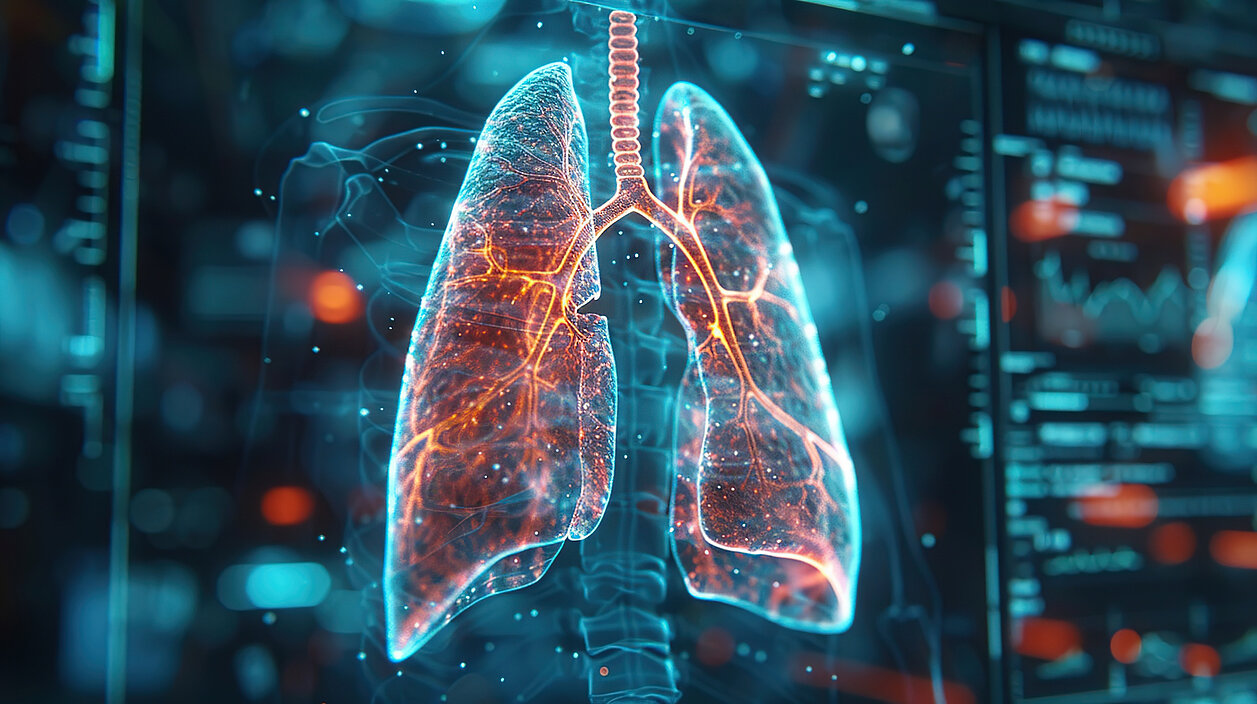
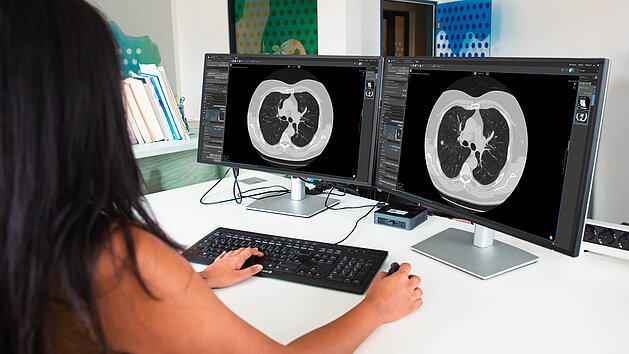
The study conducted by Heidelberg University Hospital investigates the use of diffusion-weighted MRI (DWI) to predict early treatment outcomes in patients with advanced lung adenocarcinoma. The researchers analyzed changes in radiomic features derived from ADC (Apparent Diffusion Coefficient) maps in 144 patients who were treated with either tyrosine kinase inhibitors (TKI) or platinum-based chemotherapy (PBC).

The study found that radiomic features, known as delta-radiomics features (DRFs), were able to predict treatment success and progression-free survival (PFS) as early as 14 days after the start of treatment.

These features enabled the distinction between patients with likely better and worse treatment outcomes.

The use of DWI-based radiomics shows promising potential for early decision-making in lung cancer treatment and could allow physicians to adjust therapies more quickly.

This approach offers a non-invasive, radiation-free alternative for early assessment of treatment success in lung cancer.
Read more about the study here.

Dr. Madelaine Hettler from University Medical Center Mannheim discusses the RACOON-SAGA project and how it improves sarcoma diagnostics.
The interdisciplinary research project RACOON-SAGA combines functional MRI data and clinical information to enhance the pre-therapeutic characterization of soft tissue sarcomas.
Rare Tumors, Big Goals: How RACOON-SAGA Aims to Improve Therapy Decisions

Rare tumors, major challenges: The RACOON-SAGA project explores how imaging and clinical data can improve the pre-therapeutic characterization of soft…

Read more
The Template Designer in Use: Interview with Dr. Madelaine Hettler

Structured, well-organized data are the foundation of meaningful research. But how can they be captured effectively in practice?

Dr. Madelaine…

Read more
Lung Cancer Screening in Germany – A Turning Point for Early Detection

Few topics are currently as impactful in radiology as lung cancer screening. From 2026, Germany is expected to roll out a nationwide program, marking…

Read more
scroll-top