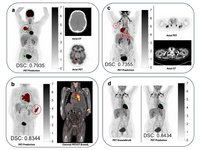
LMU University Hospital: Artificial Intelligence for TNM Staging in NSCLC – How Reliable Are AI-Based Segmentations?
The recent study “Artificial intelligence for TNM staging in NSCLC – a critical appraisal of segmentation utility in [¹⁸F]FDG PET/CT” provides a critical evaluation of the clinical value of…
Knowledge Hub
The Knowledge Hub for Medical Imaging Professionals: Transforming Radiology with Structured Reporting, Data-Driven Approaches and Multicentric Research
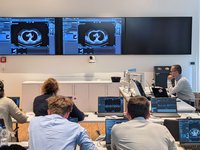
Successful “RECIST and Beyond” Workshop in Cologne: Advancing Precision in Oncologic Imaging
How can complex tumor findings be assessed accurately, reproducibly, and in line with clinical guidelines?

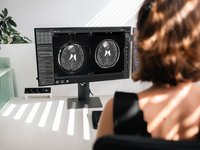
Implementing RANO 2.0 for Neuro-Oncology Clinical Trials in mint Lesion
Tumor response assessment in neuro-oncology clinical trials requires careful attention to measurement protocols and confirmation scan requirements. To address evolving research needs and standardize…
“Making the Invisible Visible”: How RACOON-MARDER Aims to Improve Early Detection of Liver Cancer Using MRI and AI
Hepatocellular carcinoma (HCC) is a potentially deadly tumor. The decisive factor is the timing of diagnosis: if HCC is detected early, there is a chance for complete removal and, in the best case,…
RACOON – Imaging, Data & Collaboration for Better Decisions
Modern radiology faces a central question: how can imaging and clinical data be combined in a way that leads to more precise diagnoses, better-informed decisions, and more individualized…

Rethinking Early Detection: How RACOON-MARDER Aims to Spot Liver Cancer Sooner
Hepatocellular carcinoma (HCC) is often diagnosed too late, limiting treatment options and survival. The RACOON-MARDER project aims to change that. By combining MRI imaging, clinical data, and…