The ESOI-EORTC workshop, hosted by the European Society of Oncological Imaging (ESOI) and the European Organization for Research and Treatment of Cancer (EORTC), offers valuable hands-on training in assessing tumor response to treatment.
The workshop focuses on imaging criteria, structured oncologic reporting, and real-world cancer cases. Mint Medical is proud to support the event by providing workstations equipped with the latest version of mint Lesion software for the interactive sessions. Participants will gain practical experience and can earn a RECIST qualification certificate.
We recently had the pleasure of speaking with Dr. Melvin D'Anastasi, ESOI President and one of the organisers of the ESOI-EORTC workshop. In this interview, Dr. D'Anastasi shares his insights into the upcoming workshop, designed specifically for radiologists and radiology residents.
Read on to explore how this workshop can help you refine your skills or watch the full video interview on Youtube.
What is the idea behind this workshop?
The European Society of Oncologic Imaging started organizing these tumor response assessment workshops in 2014. At the time, we had identified a need for formal training of radiologists in assessing response to treatment on imaging. In fact, we were the first European organization to organize this training. We found that the best way to do it was through a hands-on approach, in which participants are trained in small groups, getting individual attention from experts in assessing tumor response in clinical trials. In 2016, we started a collaboration with the EORTC, and this has been a very successful collaboration. We have organized join workshops with them every year in different European locations.
What is the primary purpose and value of the workshop?
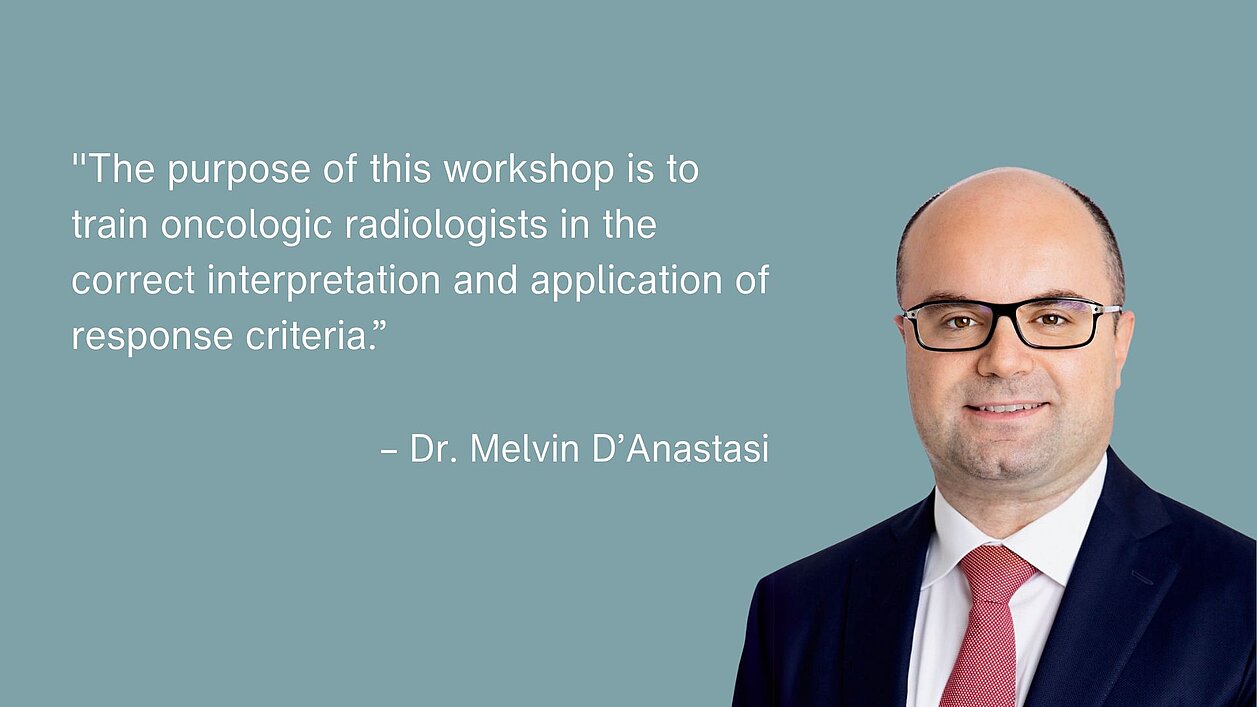
The purpose of this workshop is to train oncologic radiologists in the correct interpretation and application of response criteria. We aim to give them a solid basis of knowledge to be able to participate as readers in clinical trials and this is also done by going through a number of challenging cases and discussing common and less common issues, which are encountered during the evaluation. We train them to avoid potential pitfalls in response assessment. Participants also have the opportunity to work together through the cases, or they can interact with each other. And since we started our collaboration with the EORTC, we offer a RECIST qualification exam, which radiologists can sit for, and if successful, obtain a RECIST qualification from ESOI and from the EORTC.
Who can benefit from this workshop?
This course is aimed at those radiologists, who already have a basic knowledge of response criteria but do not yet feel so confident in their use and would like to delve deeper into the topic to gain more confidence. Also to those who are considering becoming readers in clinical trials.