jump to content jump to footer
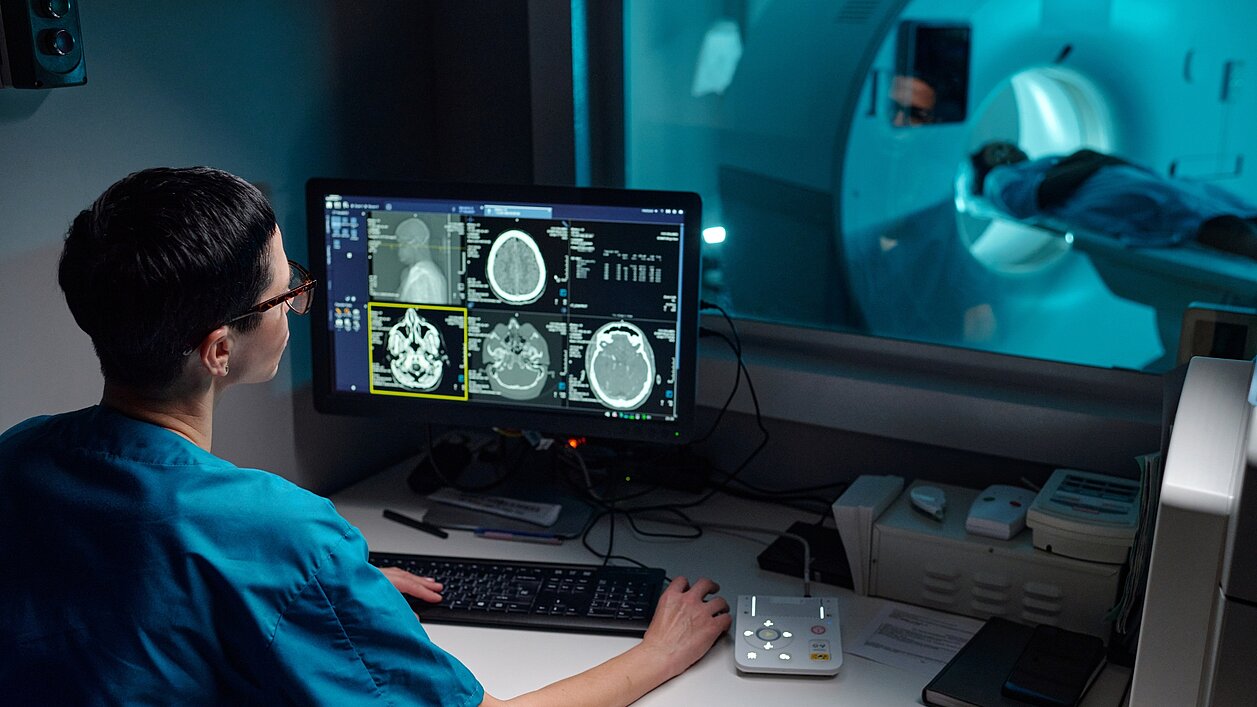
Medical professional reviewing patient's MRI images on computer monitor with patient in MRI machine in background.
TGSE-BLADE demonstrated significantly reduced geometric distortion and artifacts caused by intracranial air, enabling more accurate detection of ischemic changes and improving diagnostic confidence in early postoperative MRI.

Postoperative Brain MRI After Tumor Resection: Reducing Artifacts and Improving Diagnostic Accuracy

Postoperative MRI after brain tumor surgery is often affected by artifacts caused by intracranial air, limiting reliable image interpretation.

A recent study shows that TGSE-BLADE DWI significantly reduces image distortion compared to standard RESOLVE techniques.

Using mint Lesion for quantitative analysis, researchers demonstrated near-perfect agreement with T1-weighted reference scans—resulting in improved diagnostic confidence in postoperative imaging.
What are the implications for clinical practice?

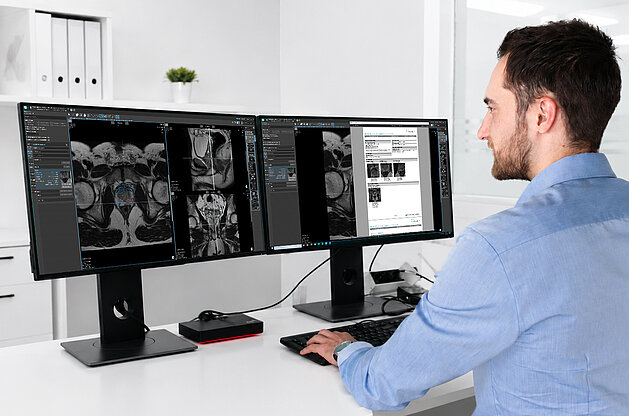
Screenshot of the mint Lesion interface showing RANO 2.0 configuration, tumor burden calculations, and structured neuro-oncology assessment tools.
mint Lesion fully supports RANO 2.0 implementation with configurable parameters, automated tumor burden calculations, and structured workflows for neuro-oncology clinical trials.
Implementing RANO 2.0 for Neuro-Oncology Clinical Trials in mint Lesion

Tumor response assessment in neuro-oncology clinical trials requires careful attention to measurement protocols and confirmation scan requirements. To…

Read more
Image of a patient getting an MRI scan, signifying how RACOON projects in Germany show how imaging, structured reporting, and AI jointly advance clinical research.
Overview of major RACOON projects in radiology and clinical research.
RACOON – Imaging, Data & Collaboration for Better Decisions

Modern radiology faces a central question: how can imaging and clinical data be combined in a way that leads to more precise diagnoses,…

Read more
Interview with Prof. Timm Denecke about the RACOON-MARDER project and AI-powered early detection of liver cancer using MRI
An in-depth interview with Prof. Timm Denecke about the RACOON-MARDER project
Rethinking Early Detection: How RACOON-MARDER Aims to Spot Liver Cancer Sooner

Hepatocellular carcinoma (HCC) is often diagnosed too late, limiting treatment options and survival. The RACOON-MARDER project aims to change that. By…

Read more
scroll-top