jump to content jump to footer
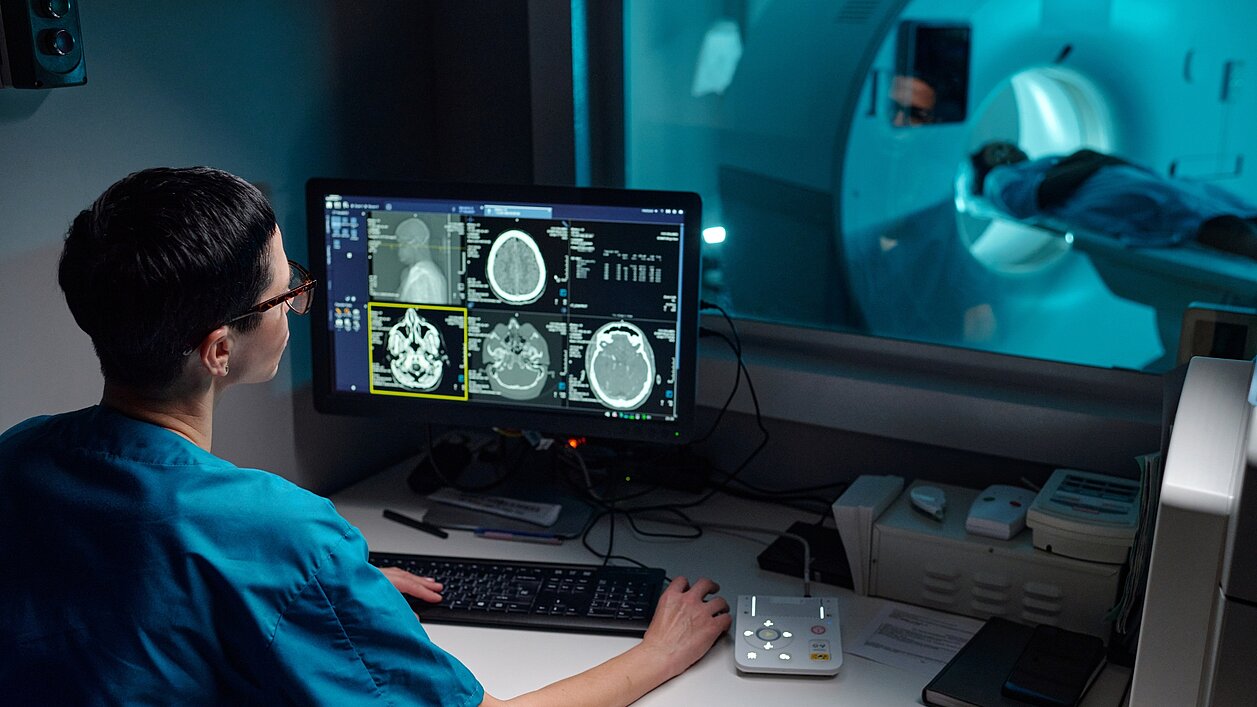
Medical professional reviewing patient's MRI images on computer monitor with patient in MRI machine in background.
TGSE-BLADE demonstrated significantly reduced geometric distortion and artifacts caused by intracranial air, enabling more accurate detection of ischemic changes and improving diagnostic confidence in early postoperative MRI.

Postoperative Brain MRI After Tumor Resection: Reducing Artifacts and Improving Diagnostic Accuracy

Postoperative MRI after brain tumor surgery is often affected by artifacts caused by intracranial air, limiting reliable image interpretation.

A recent study shows that TGSE-BLADE DWI significantly reduces image distortion compared to standard RESOLVE techniques.

Using mint Lesion for quantitative analysis, researchers demonstrated near-perfect agreement with T1-weighted reference scans—resulting in improved diagnostic confidence in postoperative imaging.
What are the implications for clinical practice?

Insights into the BZKF BORN-Project – Interview with Dr. Mandy Wahlbuhl-Becker

The Bavarian Oncological Radiology Network (BORN) is enhancing cancer diagnostics in Bavaria through standardized imaging and structured reporting. 

Read more
RACOON-RESCUE is Advancing Pediatric Non-Hodgkin Lymphoma Care

Pediatric Non-Hodgkin Lymphoma (NHL) is the fourth most common tumor in children and adolescents, yet its radiological methods lack standardization,…

Read more
Streamline Prostate Cancer Screenings with Prostate.Carcinoma.ai in mint Lesion

The Prostate.Carcinoma.ai plug-in, developed by our partner FUSE-AI, is a powerful addition to mint Lesion, designed specifically to enhance prostate…

Read more
scroll-top