jump to content jump to footer
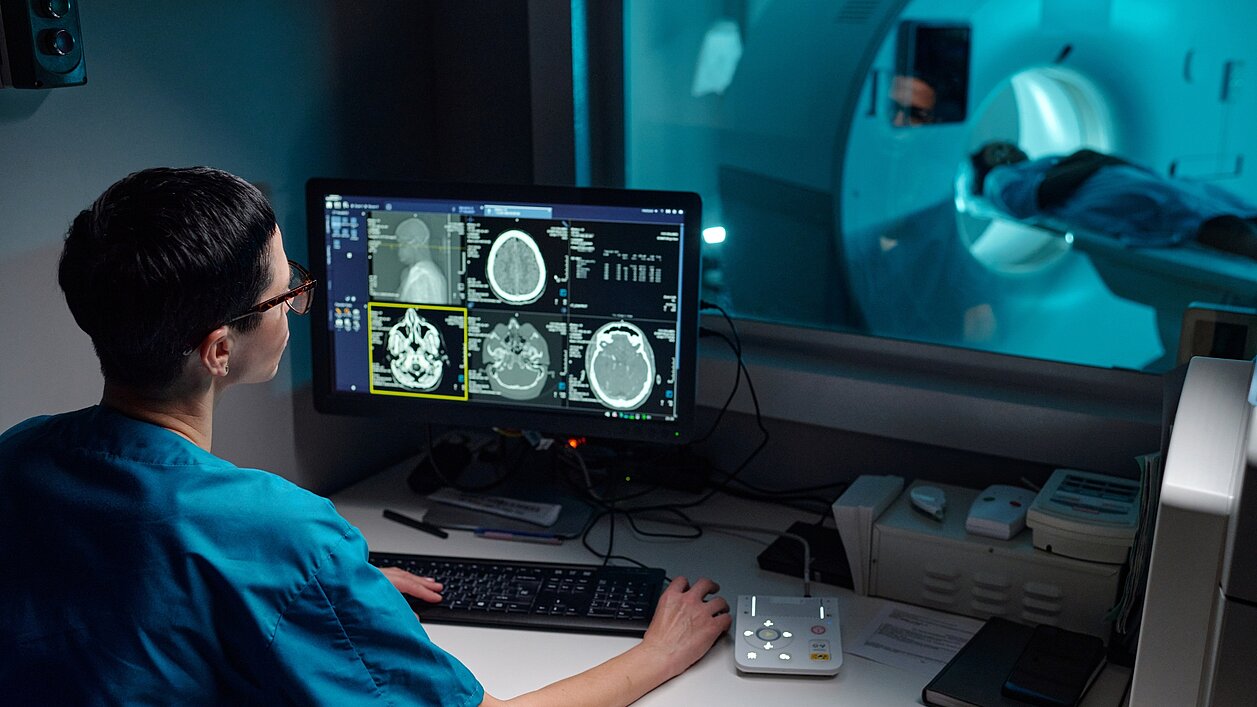
Medical professional reviewing patient's MRI images on computer monitor with patient in MRI machine in background.
TGSE-BLADE demonstrated significantly reduced geometric distortion and artifacts caused by intracranial air, enabling more accurate detection of ischemic changes and improving diagnostic confidence in early postoperative MRI.

Postoperative Brain MRI After Tumor Resection: Reducing Artifacts and Improving Diagnostic Accuracy

Postoperative MRI after brain tumor surgery is often affected by artifacts caused by intracranial air, limiting reliable image interpretation.

A recent study shows that TGSE-BLADE DWI significantly reduces image distortion compared to standard RESOLVE techniques.

Using mint Lesion for quantitative analysis, researchers demonstrated near-perfect agreement with T1-weighted reference scans—resulting in improved diagnostic confidence in postoperative imaging.
What are the implications for clinical practice?

Comparison of iRECIST and RECIST 1.1 for Evaluating Immunotherapy in Melanoma and Non-Small Cell Lung Cancer

In a retrospective study conducted at the University Hospital Cologne, the radiological criteria iRECIST and RECIST 1.1 were compared for assessing…

Read more
Developing Standardized Reporting Templates for Sarcomas: Insights from Prof. Dr. Wolfgang Kunz

Sarcomas are a rare and heterogeneous group of malignant tumors that pose significant challenges in both diagnosis and treatment. Within the framework…

Read more
Use of Multiparametric MRI in Prostate Cancer Treatments: A Prospective Study

The prospective study conducted by LMU Klinikum München investigates the effectiveness of vascular-targeted photodynamic therapy (VTP) and…

Read more
scroll-top