jump to content jump to footer
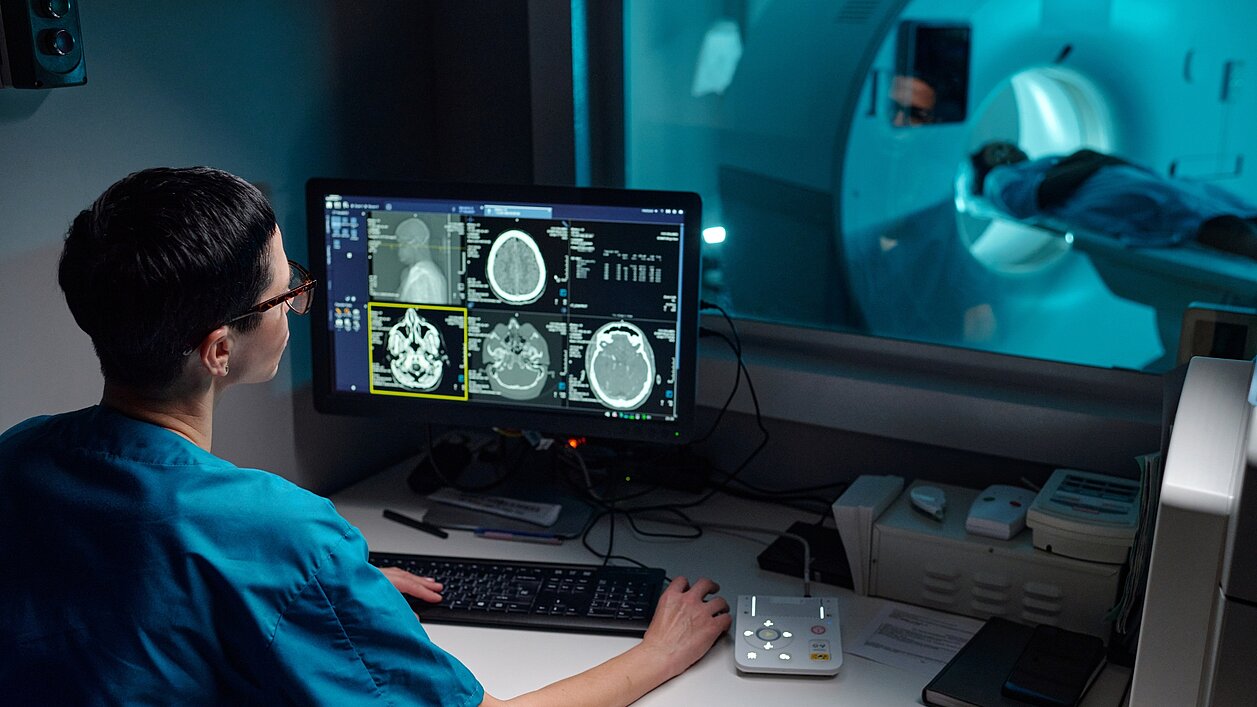
Medical professional reviewing patient's MRI images on computer monitor with patient in MRI machine in background.
TGSE-BLADE demonstrated significantly reduced geometric distortion and artifacts caused by intracranial air, enabling more accurate detection of ischemic changes and improving diagnostic confidence in early postoperative MRI.

Postoperative Brain MRI After Tumor Resection: Reducing Artifacts and Improving Diagnostic Accuracy

Postoperative MRI after brain tumor surgery is often affected by artifacts caused by intracranial air, limiting reliable image interpretation.

A recent study shows that TGSE-BLADE DWI significantly reduces image distortion compared to standard RESOLVE techniques.

Using mint Lesion for quantitative analysis, researchers demonstrated near-perfect agreement with T1-weighted reference scans—resulting in improved diagnostic confidence in postoperative imaging.
What are the implications for clinical practice?

Leave No Data Behind: Commitment to Data Excellence

At Mint Medical, we understand data as a cornerstone for improving patient care and groundbreaking research. Our mission is clear: Leave No Data…

Read more
ESOI-EORTC Workshop: Hands-On Training in Assessing Tumor Response to Treatment

The ESOI-EORTC workshop, hosted by the European Society of Oncological Imaging (ESOI) and the European Organization for Research and Treatment of…

Read more
Systems on FHIR: Driving Healthcare Innovation Through Interoperability

Interoperability is revolutionizing healthcare by enabling the seamless exchange of patient data across systems. This efficient data flow is critical…

Read more
scroll-top