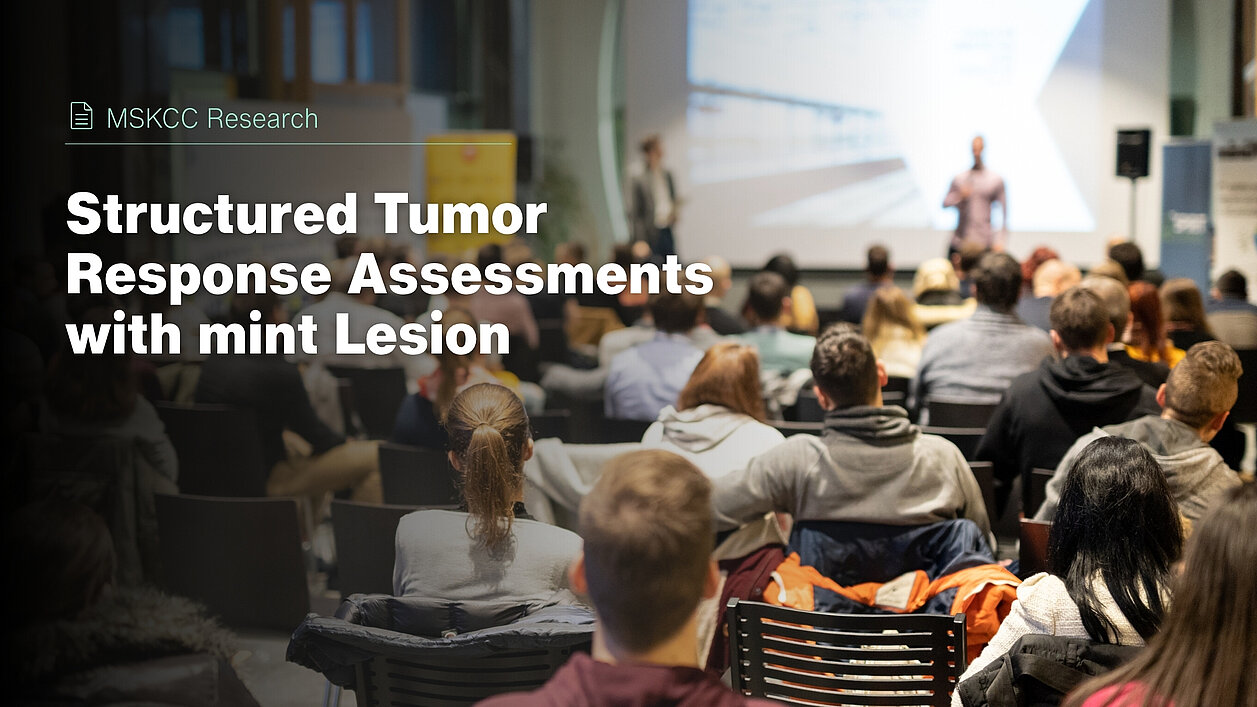
Big congratulations to Steven Philemond and Alison Chiaramonte of Memorial Sloan Kettering Cancer Center for presenting their research poster “Use of Electronic Solution Supplemented with Portfolio of Tailored Resources Improves Tumor Response Assessment for Patients” at the recent 2026 NCCN Annual Conference.
Their work dives into how their institutional investment into standardizing clinical trial response assessments leveraging mint Lesion has improved operational efficiency and data quality in real, measurable ways since implementation in 2019:
- 32% reduction in data deficiencies found during internal audits
- Principal Investigator use increased from 10% (2019) to 78% (2024)
- Integration with existing clinical research workflows enhanced inter-disciplinary collaboration
Benefits/Outcomes
Data Integrity
- Quality: Automated calculations
- Completeness: Fields of information required before sign-offs
- Record-keeping: Legibility, timestamps
- Privacy: Access granted to assessments by administrators
- Reduction in deficiencies found by internal quality assurance audits
Reduce Administrative Burden
- Automated back-end processes, such as automatically sending assessments to Epic EMR
- Radiologist, Investigator, and Study Team user groups avoid using manual methods and sending them around for input and sign-offs
- Share data with trial sponsors more readily
Ease of Use
- Define a clear workflow among stakeholders to complete assessments
- Tumor Response Assessments are housed in one location to improve accessibility for clinical staff and audit preparedness
- Scalable to accommodate increase in assessment volume as well as new protocol criteria and unique protocol structures
Financial
- Bill more accurately for assessments
- An assessment is never 'lost' and has to be redone
Read the full poster by clicking here.
Mint Medical is proud to support Memorial Sloan Kettering Cancer Centers's mission of ending cancer for life and can't wait to see what they accomplish next.
If you're looking to transform the intersection of clinical imaging data in cancer research and how Mint Lesion can support your research aspirations, let's talk.