jump to content jump to footer

Early Detection of Treatment Response in Lung Cancer Using Delta-Radiomics Features

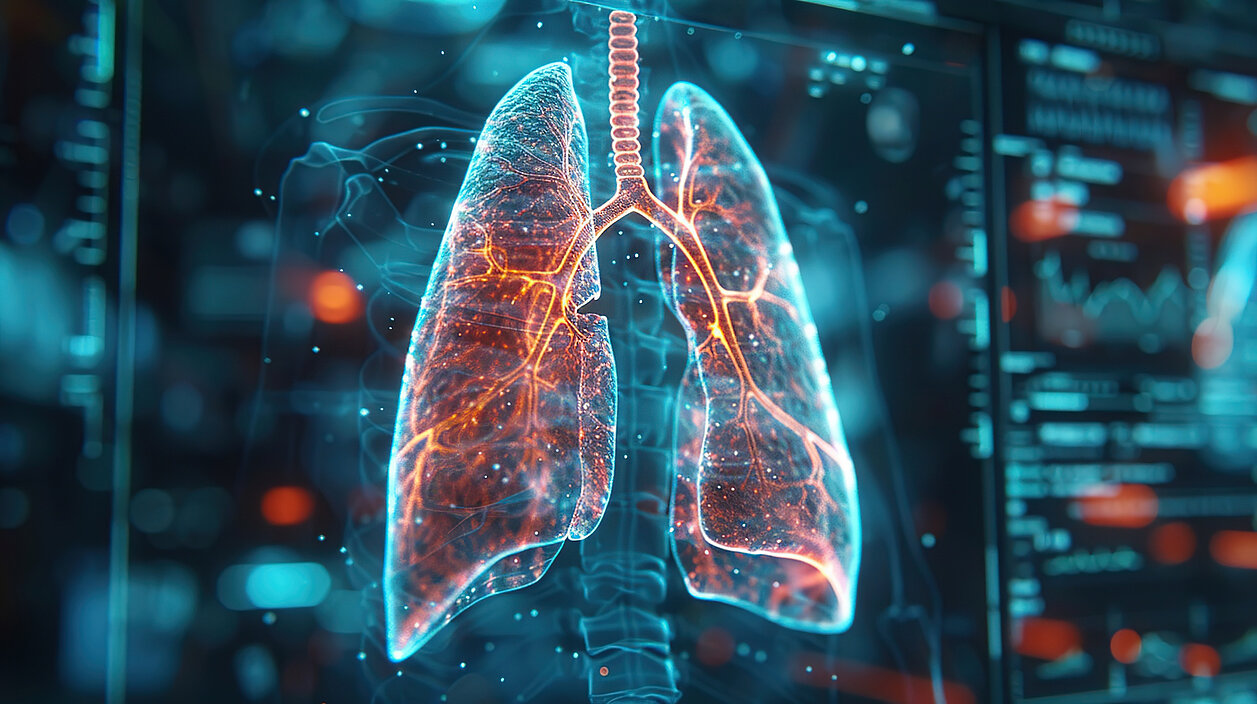
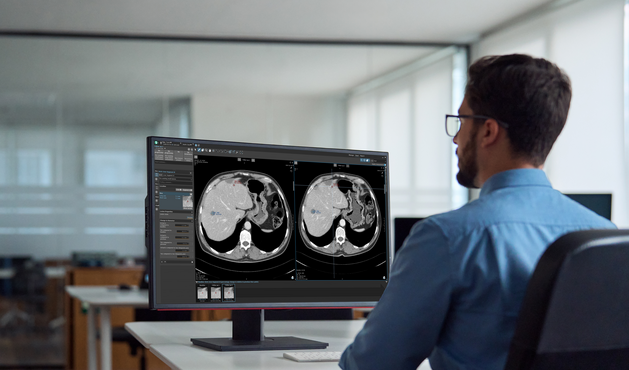
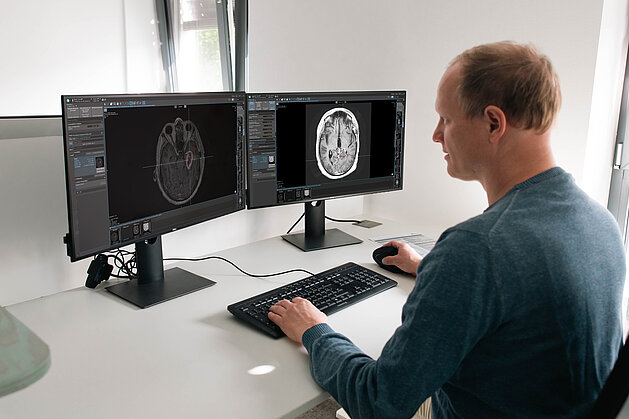
The study conducted by Heidelberg University Hospital investigates the use of diffusion-weighted MRI (DWI) to predict early treatment outcomes in patients with advanced lung adenocarcinoma. The researchers analyzed changes in radiomic features derived from ADC (Apparent Diffusion Coefficient) maps in 144 patients who were treated with either tyrosine kinase inhibitors (TKI) or platinum-based chemotherapy (PBC).

The study found that radiomic features, known as delta-radiomics features (DRFs), were able to predict treatment success and progression-free survival (PFS) as early as 14 days after the start of treatment.

These features enabled the distinction between patients with likely better and worse treatment outcomes.

The use of DWI-based radiomics shows promising potential for early decision-making in lung cancer treatment and could allow physicians to adjust therapies more quickly.

This approach offers a non-invasive, radiation-free alternative for early assessment of treatment success in lung cancer.
Read more about the study here.

mint Lesion: lesion categorization under the radiologic recurrence criteria for adjuvant trials
Radiologic recurrence criteria for adjuvant clinical trials in bladder cancer
Radiologic Recurrence Criteria for Adjuvant Clinical Trials in Bladder Cancer
After radical surgery, there is no measurable disease left to follow. A consensus framework defines when a finding on a surveillance scan counts as…
Read more
Radiologist reviewing a glioma MRI case in mint Lesion, with AI-based brain tumor segmentation from Snke (in development)
Consistent Glioma MRI Reporting with mint Lesion
In neuro-oncology, imaging assessments directly shape treatment decisions. For example, under RANO 2.0, whether a follow-up MRI is classified as…
Read more
Representatives of Mint Medical and Curagita shaking hands to mark their lung cancer screening partnership
Curagita and Mint Medical are building a quality- and data-secure infrastructure for the new lung cancer screening program together with 25 outpatient radiology screening sites and two second-read centers. Curagita's CuraHub and Mint Medical's mint Lesion software provide the technical foundation for structured reporting, second reads, and the integration of AI solutions such as contextflow's ADVANCE Chest CT.
Lung cancer screening: cooperation for efficient processes and digital networking
Heidelberg, September 15, 2026 – In close collaboration with two second-reader centers in Heidelberg and 25 outpatient radiology screening providers,…
Read more
scroll-top