jump to content jump to footer

Comparison of iRECIST and RECIST 1.1 for Evaluating Immunotherapy in Melanoma and Non-Small Cell Lung Cancer

In a retrospective study conducted at the University Hospital Cologne, the radiological criteria iRECIST and RECIST 1.1 were compared for assessing treatment response in melanoma and NSCLC patients receiving immune checkpoint inhibitors.

The results indicate that iRECIST is better suited for capturing atypical treatment responses to immunotherapies, especially in patients experiencing pseudoprogression. iRECIST could thus contribute to a more accurate evaluation of treatment response and improved immunotherapy outcomes.

Read more about the study here.

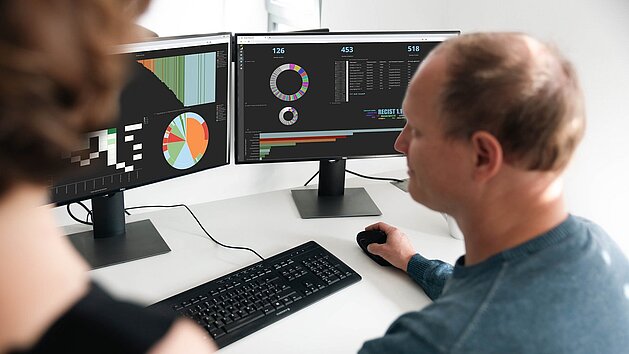
mint Lesion usage during a clinical trial read, featuring the TGRM export tool.
Bridging the Gap Between RECIST and Survival: Why the FDA’s Analysis of the g Value is a Game-Changer
For decades, oncology trials have relied on RECIST 1.1 to evaluate drug efficacy. However, these categorical "snapshot" evaluations do not always…
Read more
Participants at the RECIST and Beyond workshop in Cologne during hands-on training with mint Lesion for structured tumor response assessment.
The two-day “RECIST and Beyond” workshop at radCIO Cologne offered intensive hands-on training on RECIST, iRECIST, mRECIST and LI-RADS, with real-case reporting performed directly in mint Lesion.
Successful “RECIST and Beyond” Workshop in Cologne: Advancing Precision in Oncologic Imaging
How can complex tumor findings be assessed accurately, reproducibly, and in line with clinical guidelines?
Read more
Screenshot of the mint Lesion interface showing RANO 2.0 configuration, tumor burden calculations, and structured neuro-oncology assessment tools.
mint Lesion fully supports RANO 2.0 implementation with configurable parameters, automated tumor burden calculations, and structured workflows for neuro-oncology clinical trials.
Implementing RANO 2.0 for Neuro-Oncology Clinical Trials in mint Lesion
Tumor response assessment in neuro-oncology clinical trials requires careful attention to measurement protocols and confirmation scan requirements. To…
Read more
scroll-top