jump to content jump to footer
Prof. Dr. Dan Linh Nguyen discusses structured reporting and data-driven workflows in radiology.

Structured Reporting in Clinical Practice – PD Dr. Thi Dan Linh Nguyen-Kim on Her Experience with mint Lesion

How does structured reporting support everyday clinical practice?

Structured reporting provides the foundation for consistent, transparent, and efficient communication in radiology. It supports standardized reporting workflows, facilitates multidisciplinary collaboration, and helps ensure that clinically relevant information is documented clearly and consistently throughout the patient's care pathway.

In this interview, Prof. Dr. Thi Dan Linh Nguyen-Kim, Head of Department and Director of the Institute of Radiology and Nuclear Medicine at Stadtspital Zürich, shares her experience with mint Lesion. She discusses the role of structured, data-driven workflows in multidisciplinary collaboration and explains why clarity and consistency are essential for diagnosis, treatment decisions, and communication with both clinical teams and patients.

Dr. Nguyen-Kim, could you tell us a little about Stadtspital Zürich?

We are an institute that works across multiple locations and very interdisciplinary – with a clear focus: patient-centered care, high-quality diagnostics, and a clear treatment pathway.

The hospital has a broad setup with an additional, highly specialized focus, for example, in oncology – all in the interest of our patients. Radiology and nuclear medicine form a central hub here, from diagnostics to therapy decision-making and follow-up.

What role did mint Lesion play in your previous position?

I have actually been using mint Lesion for many, many years. Back then, in my time in a university setting, clearly in the context of oncological studies, in the context of investigator-initiated trials.

What I have always appreciated about mint Lesion is clarity, structure, and a systematic approach fully aligned with guidelines.

Why did you decide to bring mint Lesion to Stadtspital Zürich?

Structure and clarity are key for me – especially in terms of good, transparent communication, both with our clinical partners and with our patients.

This is essential for effective exchange in the context of tailored, individualized therapy.

How do you use mint Lesion today compared to before?

In a university and study setting, mint Lesion provides, especially within study protocols, a clear translation of these protocols into assessment.

Clarity and structure are exactly what also support us tremendously in daily clinical practice – clarity in communication with our clinical partners as well as with patients.

This creates confidence and delivers exactly the benefit we aim to achieve for our patients in everyday clinical work: in diagnostics, therapy decision-making, and treatment.
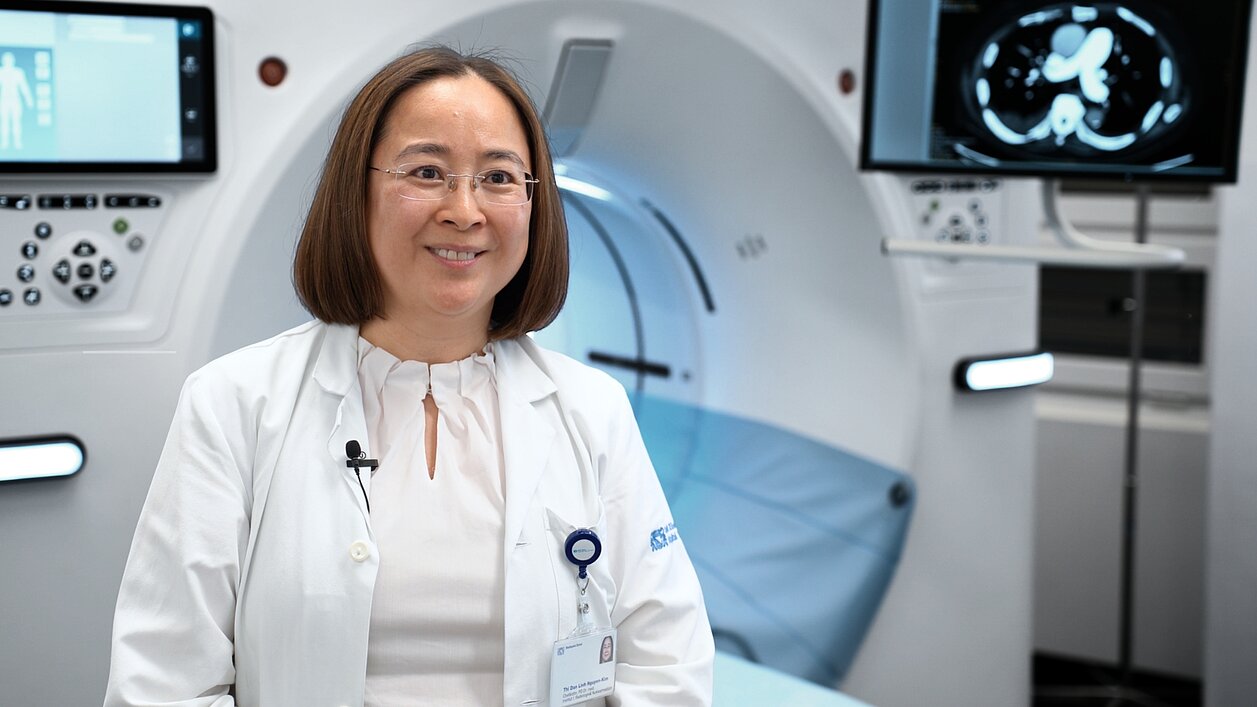
PD Dr. Dan Linh Nguyen on structured reporting and data-driven workflows in radiology.
Watch Dr. Ngyuen talk about structured reporting, data-driven workflows, and the importance of clear communication in radiology on Youtube (English subtitle available).

What role does structured reporting play in daily clinical practice?

For me, structured reporting in daily clinical practice is quality assurance.

It allows us to communicate clearly, consistently, and efficiently – to convey the message and, above all, the information that the treatment team needs in a clear way, and to make the points we communicate understandable and traceable.

In which areas do you benefit most from a structured way of working?

Structured reporting provides particular benefit, for example, in systemic therapies, in patients undergoing immunotherapy, where therapy courses are documented in radiology through follow-up examinations.

Clear criteria for the measurability of structures, as well as clear definitions and structured follow-up, support and facilitate further therapy decisions throughout the course of disease.

What does a structured, data-based workflow mean for your daily work?

What I particularly value in daily clinical practice is clarity and structure – especially in complex cases. With clarity and structure, it becomes possible to make complexity understandable and accessible for everyone involved. This is especially helpful in situations such as complicated tumor progressions, to never lose the overview and to communicate information to clinical colleagues with the clarity and precision needed to make the right decision at the right moment.


The conversation with PD Dr. Thi Dan Linh Nguyen-Kim highlights the value of structured reporting and data-driven workflows in supporting clear communication, multidisciplinary collaboration, and high-quality patient care. We thank Dr. Nguyen for sharing her insights into the role of structured reporting and data-driven workflows in daily clinical practice.

Interested in learning how mint Lesion supports radiologists with structured reporting, multidisciplinary collaboration, and longitudinal patient assessment? Contact our team and request a personalized demo.

Insights into the BZKF BORN-Project – Interview with Dr. Mandy Wahlbuhl-Becker
The Bavarian Oncological Radiology Network (BORN) is enhancing cancer diagnostics in Bavaria through standardized imaging and structured…
Read more
RACOON-RESCUE is Advancing Pediatric Non-Hodgkin Lymphoma Care
Pediatric Non-Hodgkin Lymphoma (NHL) is the fourth most common tumor in children and adolescents, yet its radiological methods lack standardization,…
Read more
Radiologist creating a structured report with mint Lesion software
Structured reporting is redefining radiology by standardizing documentation, enhancing clarity, and generating data ready for clinical use and AI applications. With mint Lesion, radiologists can work efficiently while producing high-quality, interoperable data that support diagnostics, research, and patient outcomes.
Structured Reporting in Radiology: Precision, Clarity, and Data Quality
Radiology reports are often the key to a diagnosis – and the way they are created and communicated makes a crucial difference.Traditional free-text…
Read more
scroll-top