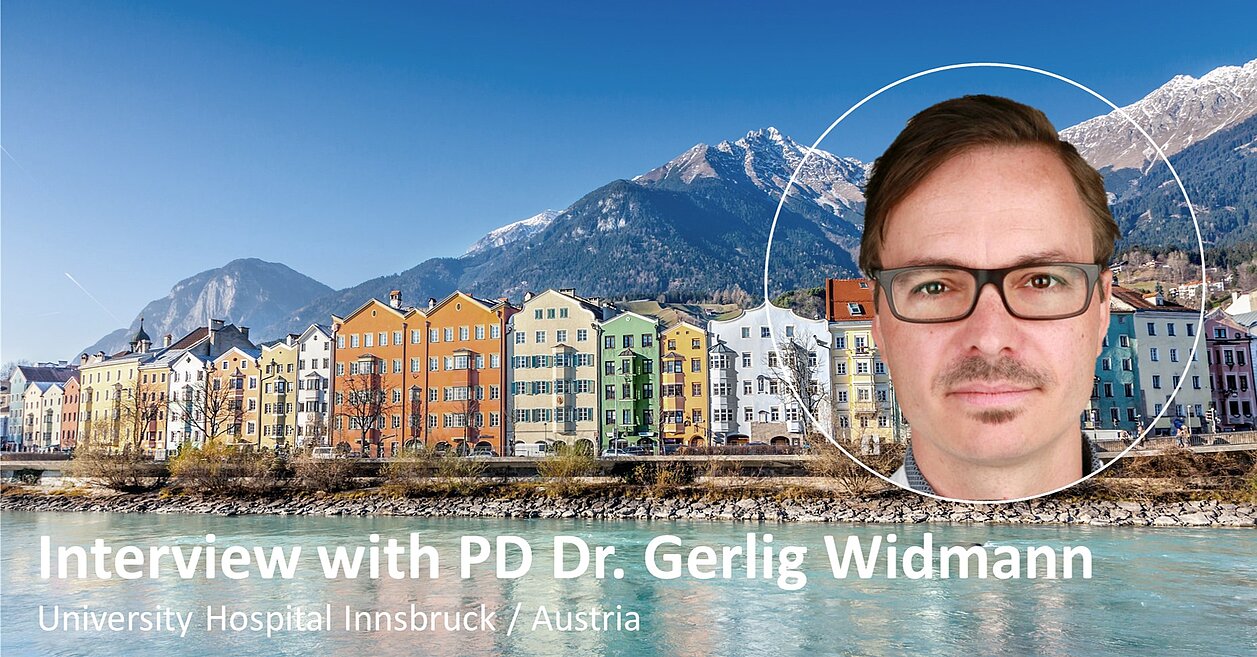
The University Hospital in Innsbruck, Austria, has been using mint Lesion™ since mid-2015 with the initial focus on clinical trials in order to guarantee the conformity with the guidelines defined in the trial protocol, especially with regards to the requested criteria like RECIST 1.1. With the further development of the reading templates in the software, which are now also focusing on clinical routine application, mint reports are now created for selected cases for cancer patients in daily routine. One of these cases is the assessment of resectability of pancreatic cancer.
We spoke with PD Dr. Gerlig Widmann about this field of application.
What are the specific requirements for radiology when assessing the resectability of pancreatic cancer?
Pancreas surgeons need detailed information in order to be able to decide if a pancreatic cancer is resectable, borderline resectable or unresectable. Specific requirements for radiology consist of making clear statements on established resectability criteria like tumor localization, size, infiltration of surrounding tissues, contact of the tumor with arterial and portal venous vessels and/or mesenteric veins, and drawing attention to anatomic vessel variations. Furthermore, possible lymph node metastases need to be described, and the presence of liver metastases as well as further distant metastases needs to be excluded with a high degree of certainty.
How does mint Lesion™ help to fulfill these requirements?
By working through TNM criteria and surgically relevant findings in a structured way, mint Lesion™ helps to fulfill these requirements in a standardized way. The documentation facilitates demonstrations of results in interdisciplinary tumor boards.
How do the referring physicians react to the new imaging result communication?
The referring physicians receive a concise and holistic tumor status of their patients based on the imaging data, including also the relevant resectability criteria. Therapy decisions can be documented more easily in this structured form and the data can be reused for tumor registers and scientific purposes.
How can this development be evaluated from a patient’s perspective?
With structured reports, patients can be informed better on the stage of their disease and can more easily comprehend therapy recommendations based on these reports.