With the nationwide rollout of Germany’s lung cancer screening, radiology providers are facing new challenges. Structured reporting, mandatory second readings, longitudinal follow-up, and AI integration must work seamlessly together to support high-quality patient care.
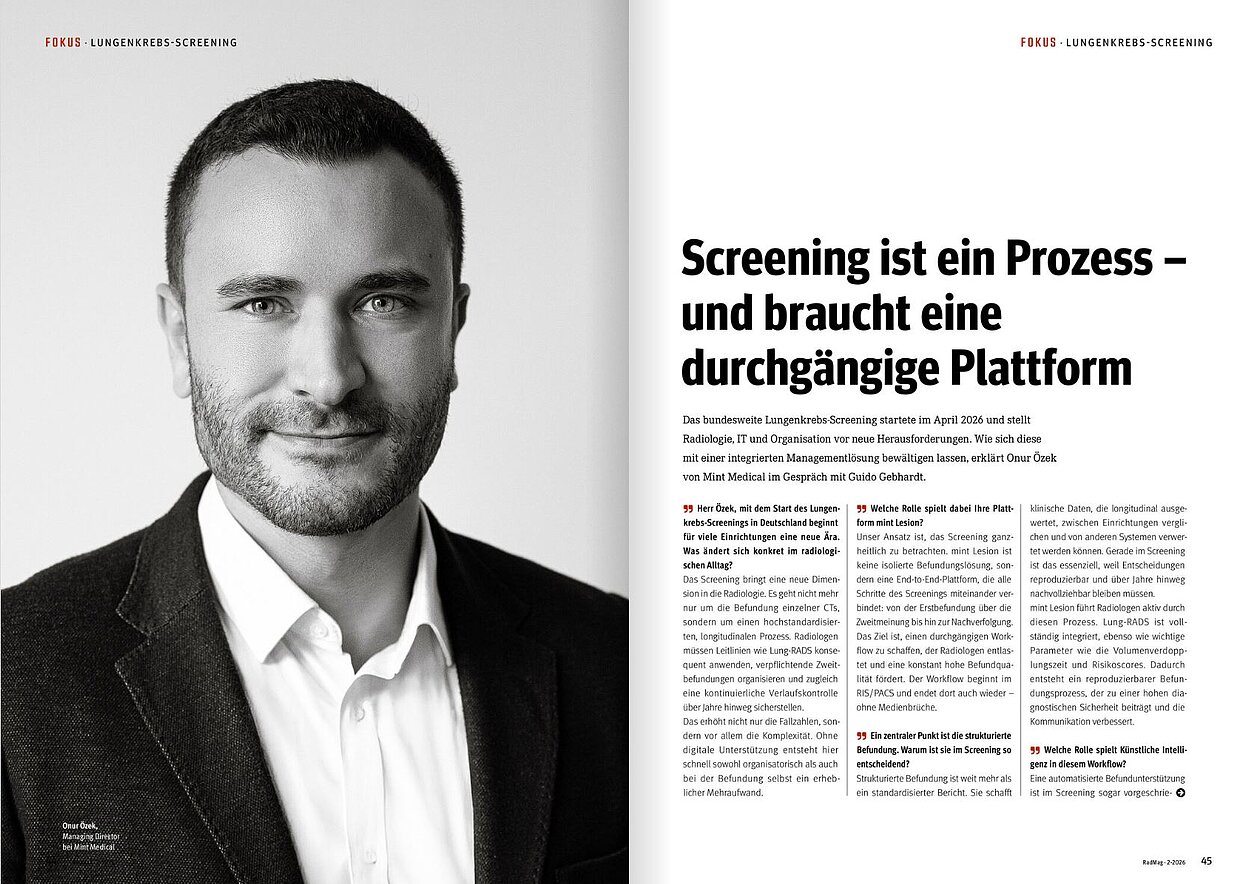
RadMag Special Edition: Onur Özek on the Challenges of Lung Cancer Screening in Germany
In the latest Radiologie Magazin Special Edition, Onur Özek, Managing Director of Mint Medical, discusses why lung cancer screening is far more than the interpretation of a single examination:
“Screening is a process – and it requires an end-to-end platform.”
In the interview, he explains the requirements that Germany’s screening program places on radiology, IT infrastructure, and organizational workflows, the role of structured reporting and AI, and why interoperability and integrated workflows are critical to the long-term success of screening networks.
“It is not enough to deploy individual technologies. What matters is that all processes work together seamlessly and are integrated into existing IT infrastructures such as RIS and PACS.”

Topics Covered in the Interview
What role does AI play in lung cancer screening?
AI supports the detection and analysis of pulmonary nodules. However, the key factor is the integration of AI-generated results into the clinical workflow.
Why is interoperability important?
Screening programs connect primary readers, second-reading centers, and registries. Without standardized data exchange, workflow disruptions and inefficiencies can occur.
How does mint Lesion support radiologists in lung cancer screening?
mint Lesion supports radiologists in addressing key requirements of lung cancer screening—from structured reporting and AI-supported analysis to second-reader workflows and the longitudinal follow-up of screening participants.
Read the full interview in the current RadMag Special Edition on lung cancer screening.
Related Resources
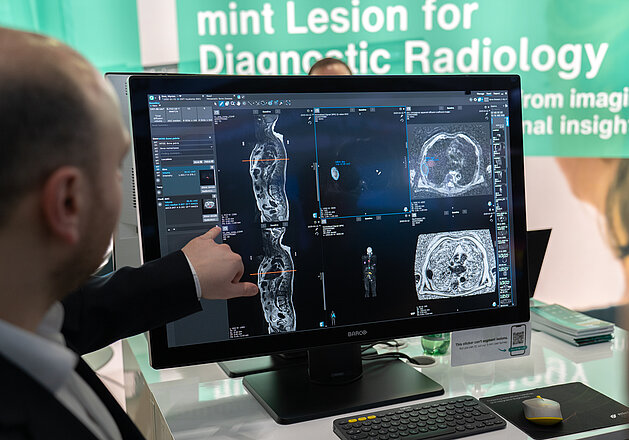
AI-Supported Quantification of Bone Involvement in Multiple Myeloma
Radiologists utilize Whole-Body MRI (WB-MRI) as an established imaging method for multiple myeloma staging [1,3]. Because it avoids ionizing…
Read more
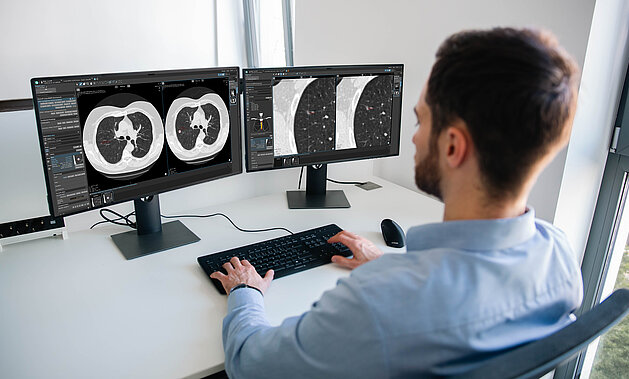
Lung Cancer Screening in Germany: How mint Lesion Supports Radiologists in Clinical Practice
A New Era of Early Detection — and New Challenges
With the introduction of the nationwide lung cancer screening program starting in 2026,…
Read more

From Theory to Practice: Hands-On RECIST Training at ECR 2026
This year, Mint Medical contributed to multiple program highlights at the ECR 2026 - bringing together innovation, education, and real-world clinical…
Read more