jump to content jump to footer

RACOON-RESCUE is Advancing Pediatric Non-Hodgkin Lymphoma Care

Pediatric Non-Hodgkin Lymphoma (NHL) is the fourth most common tumor in children and adolescents, yet its radiological methods lack standardization, leaving room for significant improvement.

The RACOON-RESCUE project addresses this gap by uniting pediatric radiologists and oncologists from all German university hospitals to systematically analyze imaging data, aiming to enhance diagnosis, treatment response assessment, and follow-up care for pediatric NHL.

The findings from RACOON-RESCUE aim to support the development of optimized and personalized diagnostic and risk-adapted therapeutic approaches.

Read the full interview with the project leads, Prof. Dr. Diane Renz and Prof. Dr. Wilhelm Wößmann, to learn more about the initiative.
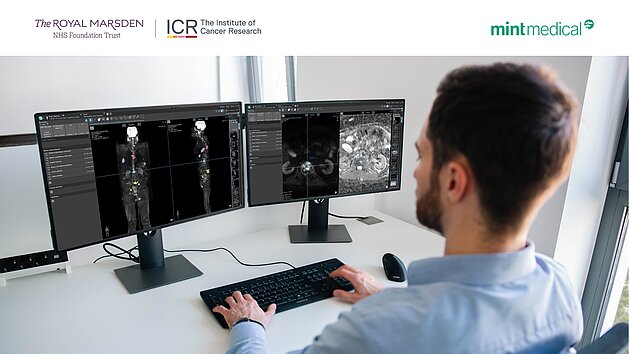
Medical professional reviewing patient's MRI images on computer monitor with patient in MRI machine in background.
TGSE-BLADE demonstrated significantly reduced geometric distortion and artifacts caused by intracranial air, enabling more accurate detection of ischemic changes and improving diagnostic confidence in early postoperative MRI.
Postoperative Brain MRI After Tumor Resection: Reducing Artifacts and Improving Diagnostic Accuracy
Postoperative MRI after brain tumor surgery is often affected by artifacts caused by intracranial air, limiting reliable image interpretation. A…
Read more
A collaborative session between a radiologist and an investigator analyzing multicentric trial progress and quantitative imaging data on a centralized dashboard.
Integrated Data Management for Multicentric Imaging in Investigator-Initiated Trials (IITs)
Establishing a Framework for Multicentric Data Coordination For many investigators, the transition from a single-site study to a multicentric model…
Read more
mint Lesion usage during a clinical trial read, featuring the TGRM export tool.
Bridging the Gap Between RECIST and Survival: Why the FDA’s Analysis of the g Value is a Game-Changer
For decades, oncology trials have relied on RECIST 1.1 to evaluate drug efficacy. However, these categorical "snapshot" evaluations do not always…
Read more
scroll-top