jump to content jump to footer

RACOON FADEN Project Tackles Early Detection of Adenomyosis

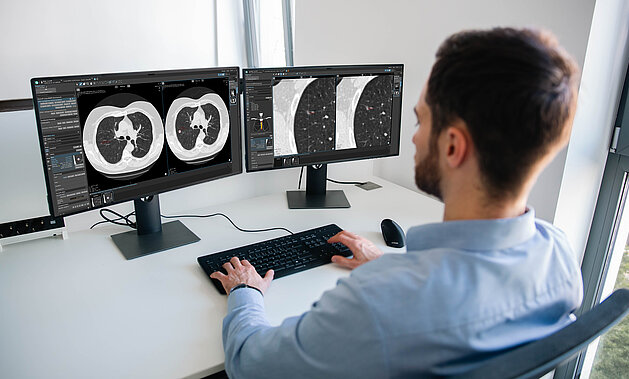
Endometriosis is a vastly under-researched condition affecting women, but it is finally receiving the attention it deserves through the RACOON FADEN project.

In an insightful interview, Prof. Dr. Sylvia Mechsner (Charité Berlin) and Prof. Dr. Matthias May (University Hospital Erlangen) discuss the RACOON FADEN project, which focuses on the early detection of adenomyosis, a form of endometriosis.

This project addresses a critical gap in the diagnosis and treatment of women with severe menstrual pain. The study uses MRI scans to detect early signs of adenomyosis and gain a deeper understanding of the morphology of a healthy uterus. Additionally, the interview highlights the innovative use of structured reporting and the existing RACOON infrastructure to enhance diagnostic precision and accelerate research.

Read the full interview here.

Radiologists reviewing oncologic imaging cases during the ESOI–EORTC Workshop on standardized tumor response assessment
The ESOI–EORTC Workshop provides practical training in RECIST 1.1, standardized tumor response assessment, clinical trial imaging, and hands-on oncology case reviews.
ESOI–EORTC Workshop 2026: Experience, Exchange, and Standardized Tumor Response Assessment in Radiology
The ESOI–EORTC Workshop is one of the leading educational formats for radiologists focusing on the standardized assessment of tumor response.This…
Read more
Woman watching the Mint Medical and contextflow webinars on lung cancer screening in Germany on Youtube
Webinar series to explore different aspects of lung cancer screening in Germany
Webinar Series: Lung Cancer Screening in Germany - From Evidence to Implementation
Lung cancer remains one of the leading causes of cancer-related mortality worldwide. In Germany, the introduction of a national lung cancer screening…
Read more
From PCWG3 to PCWG4: Evolving Standards in Prostate Cancer Clinical Trials
The Prostate Cancer Working Group 4 (PCWG4) updates and extends the recommendations of PCWG3 to reflect a patient-centric approach, the emergence of…
Read more
scroll-top