jump to content jump to footer

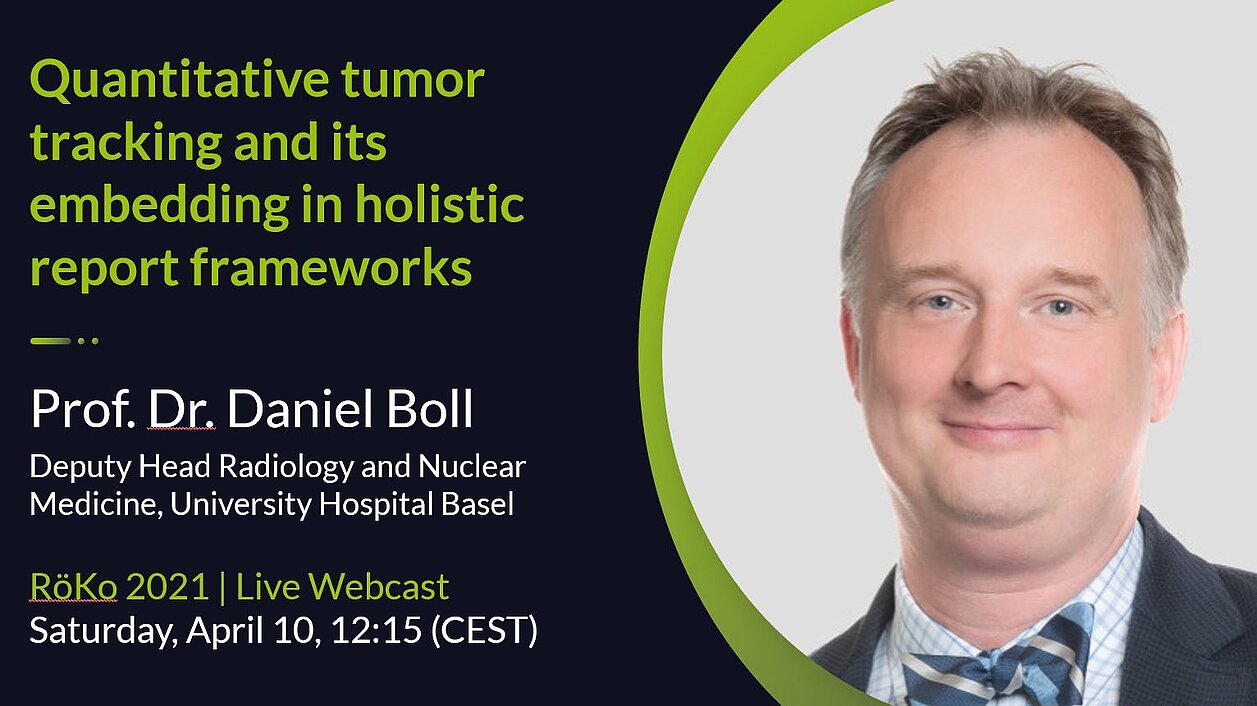
Quantitative Tumorbegleitung und ihre Einbettung in holistische Befundstrukturen (Only in German)

Wie können die Ergebnisse software-unterstützter Tumorbeurteilung gewinnbringend in die Routine-Kommunikation mit den klinischen Zuweisern und Patienten einfließen? Herr Prof. Dr. Daniel Boll, Stv. Chefarzt der Klinik für Radiologie und Nuklearmedizin am Unispital Basel, teilt seine langjährige Erfahrung und gewährt Ihnen einen Einblick in die alltägliche Arbeit mit strukturierter Befundung in der klinischen Routine. Ganz konkret zeigt er, wie aus den erhobenen Befundelementen übersichtliche, ganzheitliche und ästhetische Befundstrukturen entstehen. Darüber hinaus wirft Herr Prof. Dr. Boll auch einen Blick in die Zukunft und beschreibt, welche Potentiale ein integrierender Befundungsansatz bietet.


 

Radiologist creating a structured report with mint Lesion software
Structured reporting is redefining radiology by standardizing documentation, enhancing clarity, and generating data ready for clinical use and AI applications. With mint Lesion, radiologists can work efficiently while producing high-quality, interoperable data that support diagnostics, research, and patient outcomes.
Structured Reporting in Radiology: Precision, Clarity, and Data Quality
Radiology reports are often the key to a diagnosis – and the way they are created and communicated makes a crucial difference.Traditional free-text…
Read more
Structured Reporting Improves TNM Classification Accuracy and Radiologist Satisfaction
In a collaborative, multi-center study, radiology experts developed and validated in mint Lesion a software-assisted structured reporting (SR)…
Read more
Leverage Advanced AI-Driven Nodule Detection and Analysis for Comprehensive Patient Care
Discover the power of streamlined AI-driven lung screening with contextflow ADVANCE Chest CT integrated into mint Lesion. With automated lung nodule…
Read more
scroll-top