jump to content jump to footer

Comparison of iRECIST and RECIST 1.1 for Evaluating Immunotherapy in Melanoma and Non-Small Cell Lung Cancer

In a retrospective study conducted at the University Hospital Cologne, the radiological criteria iRECIST and RECIST 1.1 were compared for assessing treatment response in melanoma and NSCLC patients receiving immune checkpoint inhibitors.

The results indicate that iRECIST is better suited for capturing atypical treatment responses to immunotherapies, especially in patients experiencing pseudoprogression. iRECIST could thus contribute to a more accurate evaluation of treatment response and improved immunotherapy outcomes.

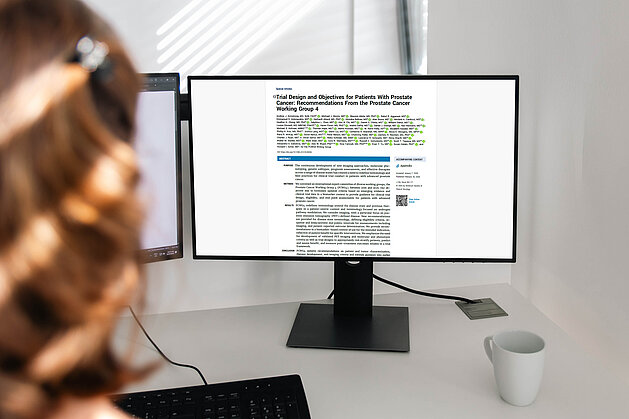
Read more about the study here.

Mint Medical and mediaire strengthen the prostate cancer care pathway with AI-Powered MRI Solutions
Mint Medical, a Snke company, and mediaire announce a collaboration to advance AI‑powered MRI workflows through the interoperability of mint Lesion…
Read more
Medical professional reviewing patient's MRI images on computer monitor with patient in MRI machine in background.
TGSE-BLADE demonstrated significantly reduced geometric distortion and artifacts caused by intracranial air, enabling more accurate detection of ischemic changes and improving diagnostic confidence in early postoperative MRI.
Postoperative Brain MRI After Tumor Resection: Reducing Artifacts and Improving Diagnostic Accuracy
Postoperative MRI after brain tumor surgery is often affected by artifacts caused by intracranial air, limiting reliable image interpretation. A…
Read more
A collaborative session between a radiologist and an investigator analyzing multicentric trial progress and quantitative imaging data on a centralized dashboard.
Integrated Data Management for Multicentric Imaging in Investigator-Initiated Trials (IITs)
Establishing a Framework for Multicentric Data Coordination For many investigators, the transition from a single-site study to a multicentric model…
Read more
scroll-top