jump to content jump to footer
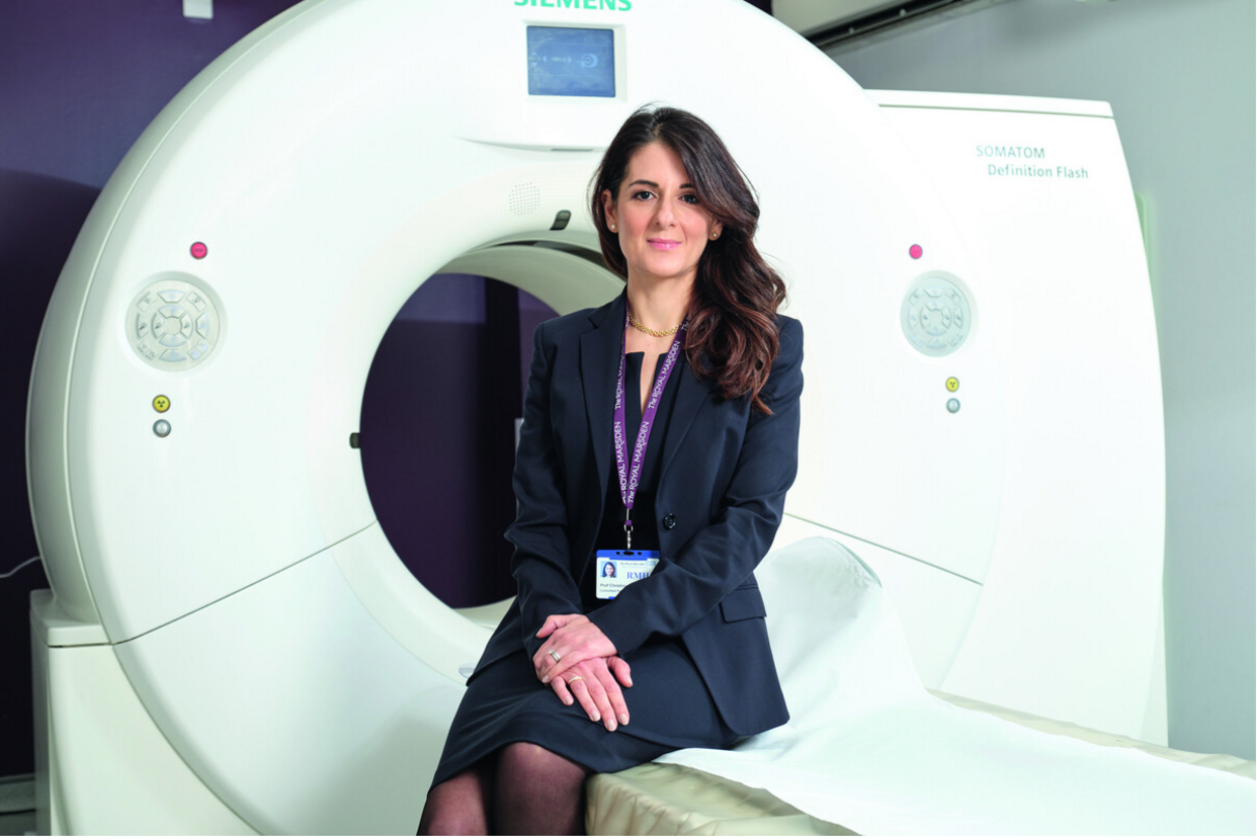
Portrait of Professor Christina Messiou, Consultant Radiologist at The Royal Marsden NHS Foundation Trust

AI-Powered Whole-Body MRI for Multiple Myeloma: Interview with Prof. Christina Messiou

Multiple myeloma poses a unique challenge for radiologists: the disease often affects the bone marrow unevenly, and conventional biopsies can only capture a small snapshot. Whole-body MRI has emerged as a highly sensitive imaging technique – and combined with AI-driven automation, it's opening up entirely new possibilities for diagnosis and treatment monitoring.

In this interview, Professor Christina Messiou (The Royal Marsden NHS Foundation Trust, Institute of Cancer Research London) explains how integrating an AI algorithm into mint Lesion is transforming image interpretation, why automated metrics like skeletal segmentation, fat fraction and longitudinal charting matter clinically, and where precision medicine for myeloma is headed next.

Read the full interview now: AI in Whole-Body MRI for Multiple Myeloma.
Screenshot of the mint Lesion interface showing RANO 2.0 configuration, tumor burden calculations, and structured neuro-oncology assessment tools.
mint Lesion fully supports RANO 2.0 implementation with configurable parameters, automated tumor burden calculations, and structured workflows for neuro-oncology clinical trials.
Implementing RANO 2.0 for Neuro-Oncology Clinical Trials in mint Lesion
Tumor response assessment in neuro-oncology clinical trials requires careful attention to measurement protocols and confirmation scan requirements. To…
Read more
Image of a patient getting an MRI scan, signifying how RACOON projects in Germany show how imaging, structured reporting, and AI jointly advance clinical research.
Overview of major RACOON projects in radiology and clinical research.
RACOON – Imaging, Data & Collaboration for Better Decisions
Modern radiology faces a central question: how can imaging and clinical data be combined in a way that leads to more precise diagnoses,…
Read more
Interview with Prof. Timm Denecke about the RACOON-MARDER project and AI-powered early detection of liver cancer using MRI
An in-depth interview with Prof. Timm Denecke about the RACOON-MARDER project
Rethinking Early Detection: How RACOON-MARDER Aims to Spot Liver Cancer Sooner
Hepatocellular carcinoma (HCC) is often diagnosed too late, limiting treatment options and survival. The RACOON-MARDER project aims to change that. By…
Read more
scroll-top