The Institute of Cancer Research (ICR), London, and The Royal Marsden NHS Foundation Trust have announced a new licensing agreement with MedTech company Mint Medical, a Snke Company, to improve monitoring for patients with bone disease in advanced prostate cancer and multiple myeloma.
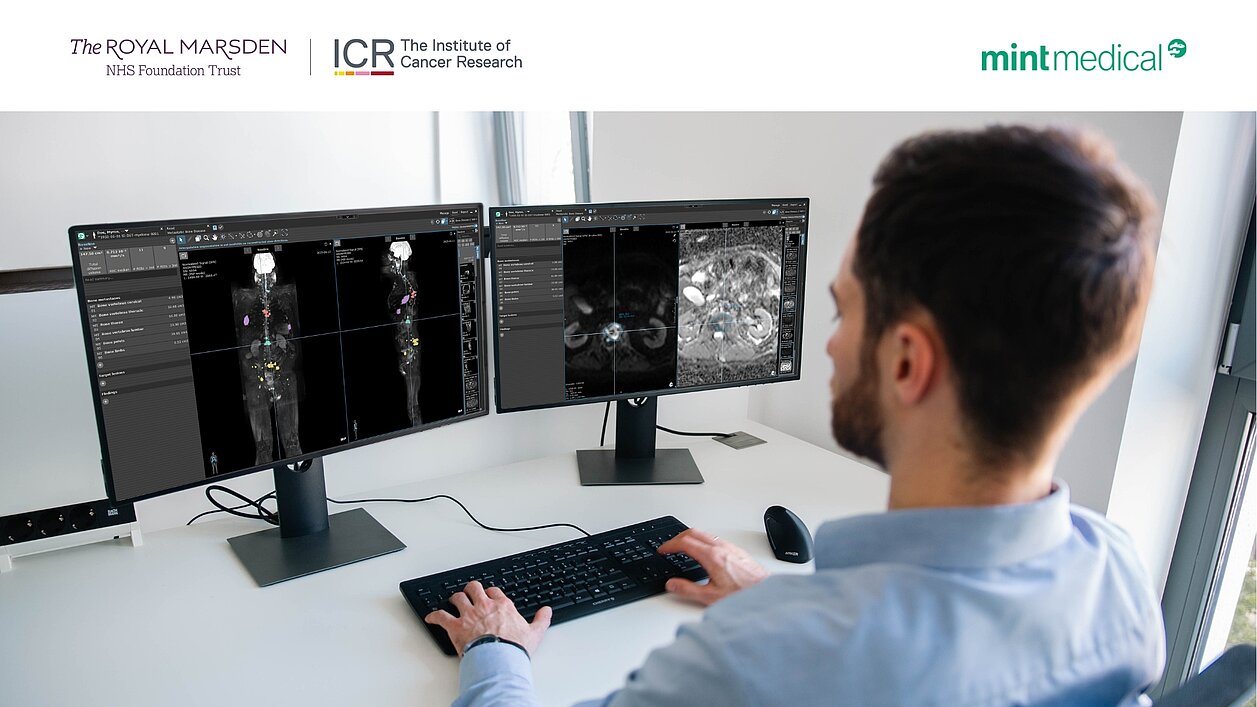
The ICR and The Royal Marsden work with Mint Medical to integrate AI-powered software into cancer treatment
Following a long-running collaboration, an AI algorithm created by researchers and clinicians at The Institute of Cancer Research (ICR) and The Royal Marsden has been integrated into Mint Medical’s mint Lesion software.
As a result of the agreement, Mint Medical can now offer this AI-powered software to healthcare providers globally.
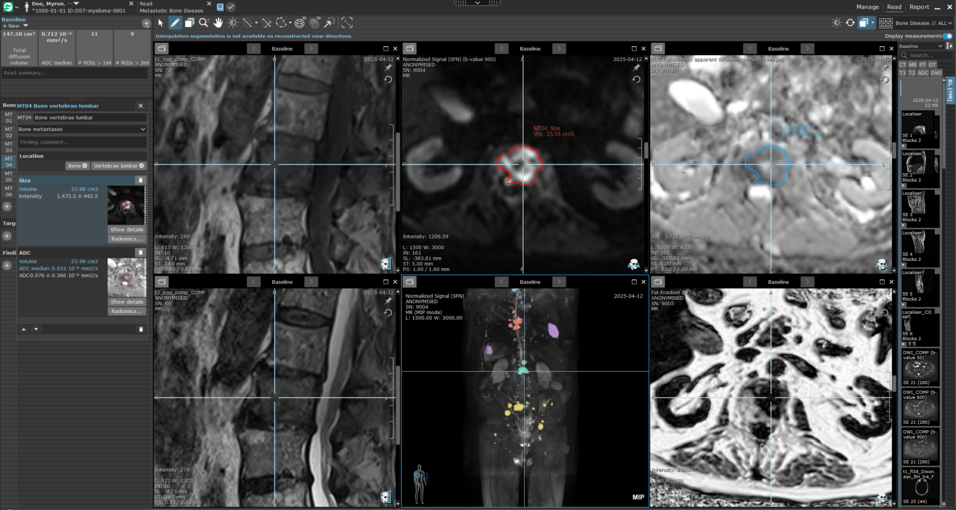
The new software was developed to improve the visualisation of cancer growing inside bones, using a type of MRI called diffusion-weighted imaging, or DWI.
DWI is especially useful in scanning patients with prostate cancer and multiple myeloma.
In prostate cancer, secondary tumours, also known as metastases, can develop in the bone. In multiple myeloma the original, or primary, tumours develop in the bone marrow.
The software helps to pin-point areas of bone disease, as well as whether the disease is getting better or worse with treatment.
It could make bone disease assessment more standardised and accurate for patients – saving patients and healthcare providers time and money.
The new software builds on expertise developed at the ICR and The Royal Marsden over several years, during which they have pioneered improvements to whole-body DWI with the aim of improving its speed and accuracy – including through this collaboration with Mint Medical.
Funders of this research have included the National Institute for Health and Care Research (NIHR), which supported it both via Invention for Innovation (i4i) grants and The Royal Marsden and the ICR’s joint NIHR Biomedical Research Centre (BRC), the ICR, which is itself a charity, and The Royal Marsden Cancer Charity and Cancer Research UK.
The initial results of the integration of the ICR-Royal Marsden-developed algorithm into mint Lesion have already been announced at major medical conferences and published in scientific journals.
Dr Matthew Blackledge, Group Leader in Computational Imaging at The Institute of Cancer Research, said:
“Our innovations in AI have provided us with an opportunity to detect the presence of disease within DWI with unprecedented speed and accuracy.
“A core motivation for all our group’s research is to translate our findings into patient benefit. By working closely with Mint Medical, we have been able to deliver clinical software that will improve the lives of patients with advanced disease.”
Professor Dow-Mu Koh, Consultant Radiologist in Functional Imaging at The Royal Marsden and Professor in Functional Cancer Imaging at The Institute of Cancer Research said:
“Assessment of cancer-related bone disease remains an unmet clinical need. Our software, designed for use alongside whole-body MRI, can help determine whether a patient is responding to treatment.
“By improving the sensitivity of treatment assessment, we may also be able to identify earlier when a treatment is not effective and switch patients to alternative therapies more quickly. Ultimately, the goal is to help patients stay well for longer.”
Dr Matthias Baumhauer, Managing Director at Mint Medical, said:
“This collaboration with The Institute of Cancer Research and The Royal Marsden is more than a development project for us – it is the connection of high-quality clinical research with our technology. I am proud of what we have achieved together: a solution that provides radiology with an objective, reproducible tool where previously it was difficult to achieve anything beyond a rough, subjective estimate.”
Dr Jon Wilkinson, Director of Business and Innovation at The Institute of Cancer Research, said:
“This collaboration is a powerful demonstration of what’s possible when world-class researchers and clinicians at the ICR and The Royal Marsden join forces with innovative partners like Mint Medical. It reflects our mission in action – turning cutting-edge discovery into real patient benefit, through purposeful collaboration.”
Related Resources
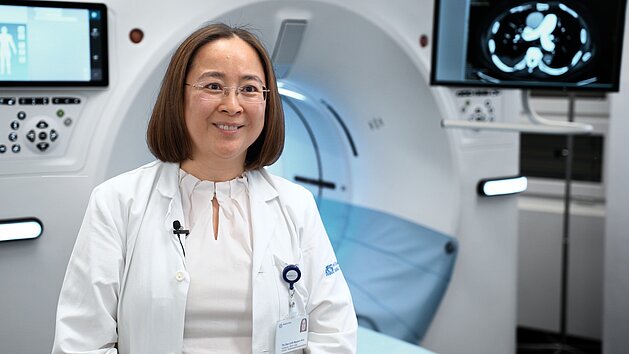
Interview with PD Dr. med. Thi Dan Linh Nguyen-Kim: Structured Reporting in Clinical Practice
In this interview, PD Dr. med. Thi Dan Linh Nguyen-Kim, Head of Department and Institute Director of Radiology and Nuclear Medicine at Stadtspital…
Read more
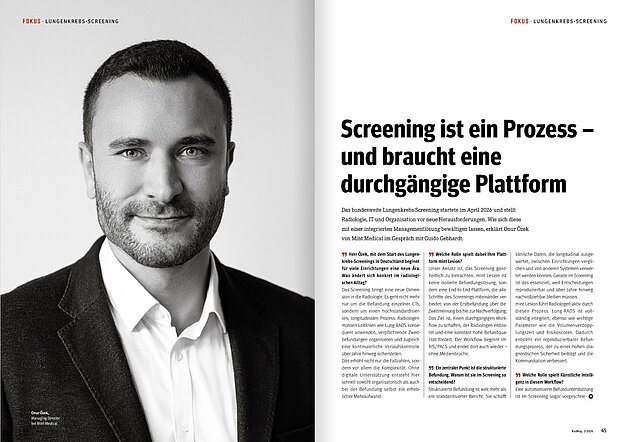
RadMag Special Edition: Onur Özek on the Challenges of Lung Cancer Screening in Germany
With the nationwide rollout of Germany’s lung cancer screening, radiology providers are facing new challenges. Structured reporting, mandatory second…
Read more
Coreline Soft and Mint Medical Announce Partnership to Advance AI-Enabled Lung Cancer Screening
Coreline Soft and Mint Medical today announced a partnership to advance AI-enabled lung cancer screening, following more than six months of technical…
Read more