
jump to content jump to footer
Interview with Prof. Timm Denecke about the RACOON-MARDER project and AI-powered early detection of liver cancer using MRI

Rethinking Early Detection: How RACOON-MARDER Aims to Spot Liver Cancer Sooner

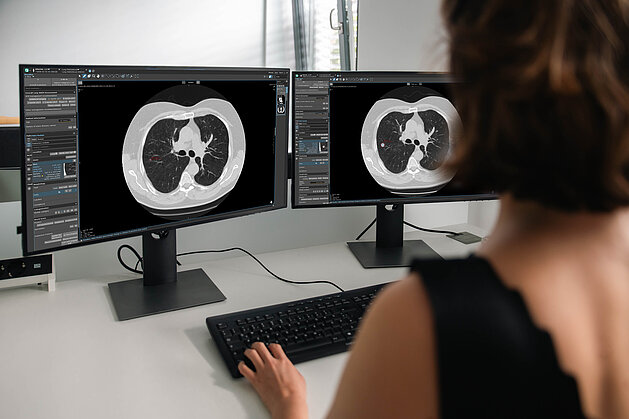
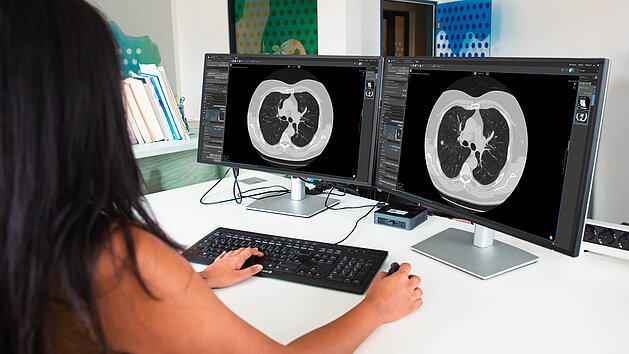
Hepatocellular carcinoma (HCC) is often diagnosed too late, limiting treatment options and survival. The RACOON-MARDER project aims to change that. By combining MRI imaging, clinical data, and AI-based risk stratification, researchers hope to identify high-risk patients earlier and enable personalized, intensified surveillance beyond what traditional ultrasound can offer.

In this interview, Prof. Dr. Timm Denecke (University Hospital Leipzig) explains how AI can make the invisible visible - and why the RACOON infrastructure is key to advancing liver cancer research.
Read more.

A collaborative session between a radiologist and an investigator analyzing multicentric trial progress and quantitative imaging data on a centralized dashboard.
Integrated Data Management for Multicentric Imaging in Investigator-Initiated Trials (IITs)
Establishing a Framework for Multicentric Data Coordination For many investigators, the transition from a single-site study to a multicentric model…
Read more
mint Lesion usage during a clinical trial read, featuring the TGRM export tool.
Bridging the Gap Between RECIST and Survival: Why the FDA’s Analysis of the g Value is a Game-Changer
For decades, oncology trials have relied on RECIST 1.1 to evaluate drug efficacy. However, these categorical "snapshot" evaluations do not always…
Read more
Participants at the RECIST and Beyond workshop in Cologne during hands-on training with mint Lesion for structured tumor response assessment.
The two-day “RECIST and Beyond” workshop at radCIO Cologne offered intensive hands-on training on RECIST, iRECIST, mRECIST and LI-RADS, with real-case reporting performed directly in mint Lesion.
Successful “RECIST and Beyond” Workshop in Cologne: Advancing Precision in Oncologic Imaging
How can complex tumor findings be assessed accurately, reproducibly, and in line with clinical guidelines?
Read more
scroll-top