Interoperability as a Key Success Factor
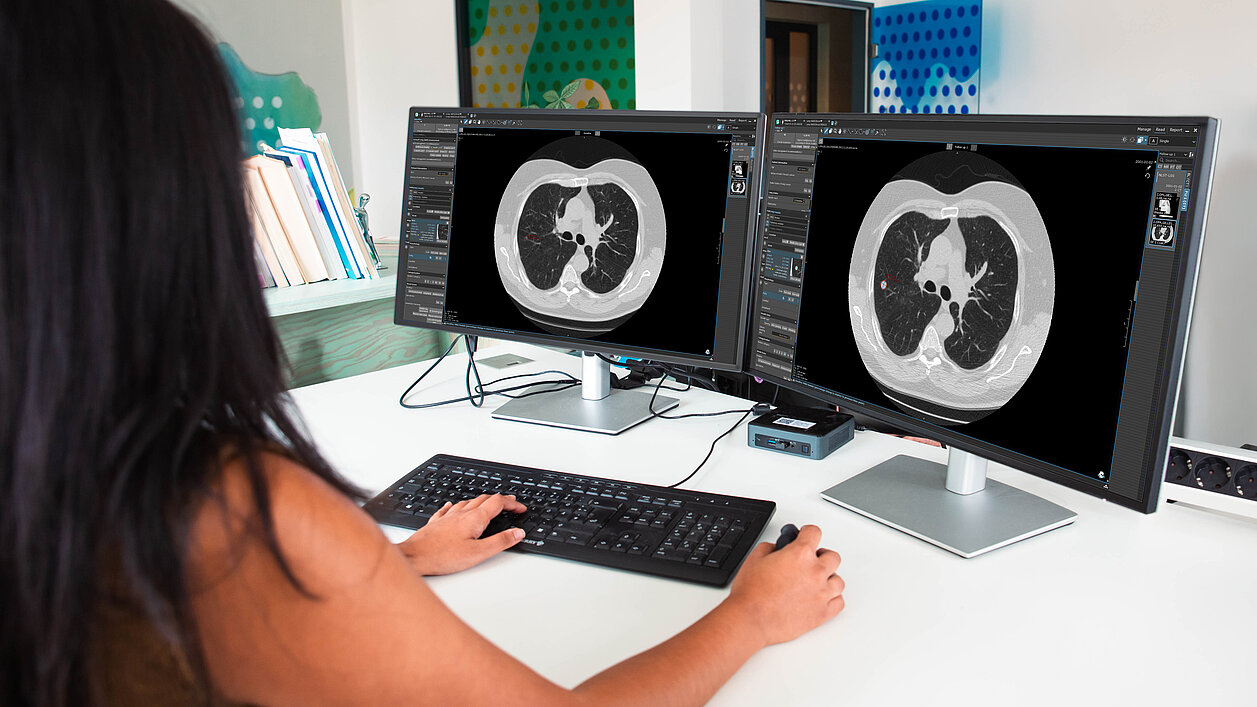
One of the greatest challenges in lung cancer screening is cross-site collaboration. By definition, screening programs require interconnected workflows: primary and secondary reading centers, heterogeneous IT systems, and external registries must communicate seamlessly.
In practice, however, limited interoperability often results in workflow disruptions, inefficient processes, and potential data loss. This is exactly where mint Lesion comes in.
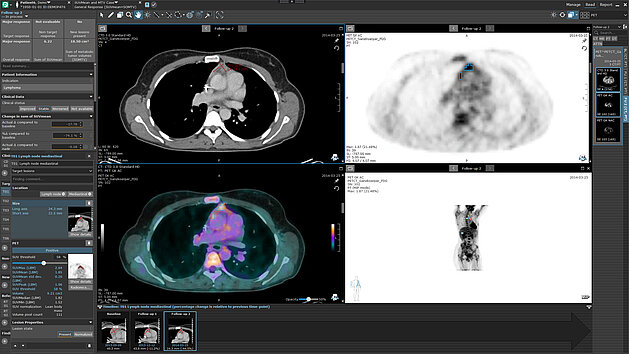
The platform enables seamless integration into existing system environments and ensures that data is available exactly where it is needed:
- integration into existing RIS/PACS infrastructures
- secure, GDPR-compliant data exchange between institutions
- flexible infrastructure models (centralized or decentralized)
- automated transfer of imaging and reporting data
- integrated archiving of imaging and reporting information
This creates a continuous data flow across institutional boundaries.
The result: no data silos, but connected and efficient workflows that form the foundation of a functional screening network.
Scalable Infrastructure for Screening Networks
Lung cancer screening is not an isolated use case, but a long-term program connecting multiple institutions and levels of care. As a result, scalability and flexibility are essential requirements for the underlying IT infrastructure.
mint Lesion was specifically designed to support these requirements and can be implemented both in individual institutions and across complex screening networks.
The platform enables:
- structured collaboration between primary and secondary reading centers
- creation and expansion of screening networks
- flexible deployment models tailored to different IT strategies
Whether based on centralized or decentralized architectures, mint Lesion adapts to existing infrastructures and scales alongside the program’s requirements.
This creates a future-ready infrastructure that supports not only the launch of lung cancer screening programs, but also their long-term evolution—making the platform suitable for both individual hospitals and large healthcare networks.