jump to content jump to footer
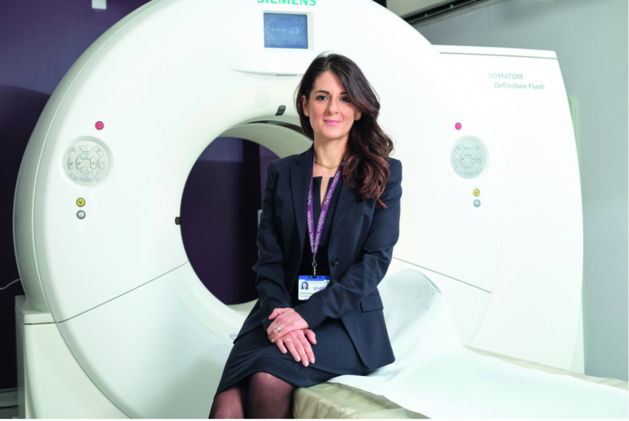
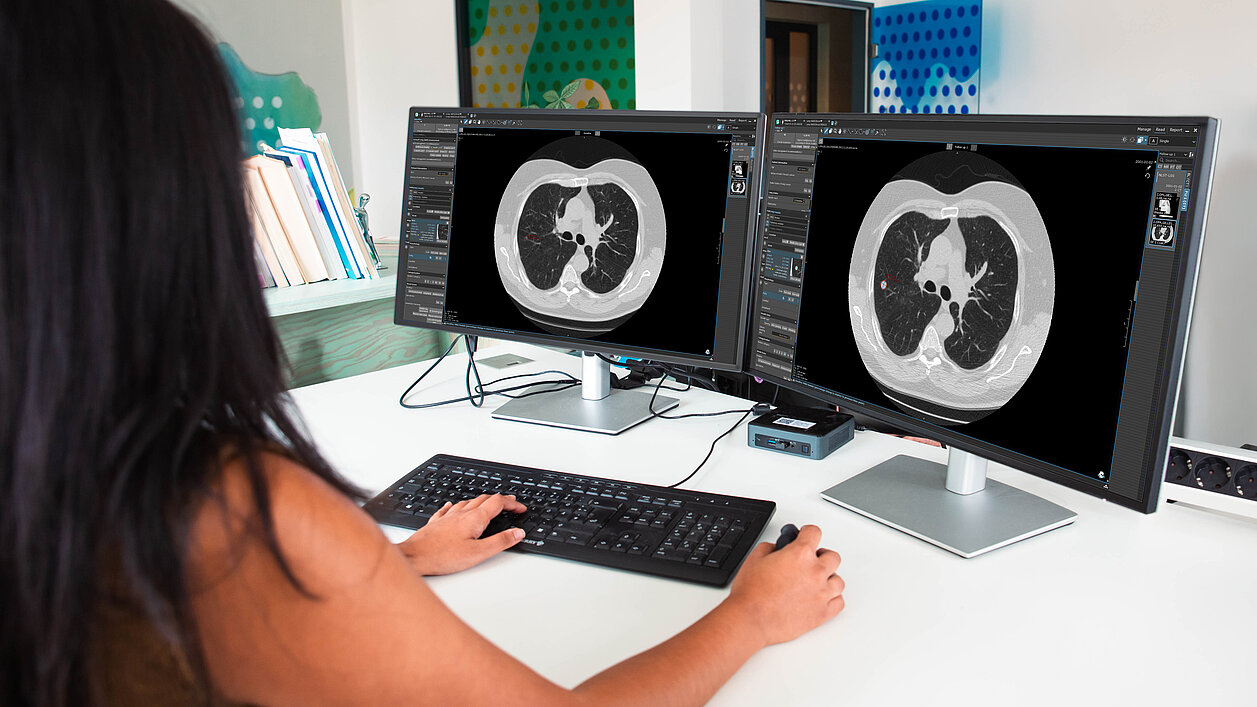
Hospital staff using mint Lesion for interoperable workflows and data management in lung cancer screening

Lung Cancer Screening in Germany: How mint Lesion Supports Hospitals with Infrastructure, Integration, and Scalability

Screening as a Strategic Challenge

With the launch of the national lung cancer screening program in 2026, hospitals and screening centers across Germany are facing a complex challenge: implementing a program with high demands on IT infrastructure, data management, interoperability, and regulatory compliance.

Beyond clinical quality, one factor will be critical to success: how efficiently screening workflows can be integrated into existing systems and operational processes.

An End-to-End Platform for the Entire Screening Workflow

mint Lesion provides a comprehensive platform that connects all key components of lung cancer screening:

  • radiology reporting
  • integration into existing IT systems
  • second-reader coordination
  • data analytics and reporting
  • registry integration 

The result is a connected, data-driven ecosystem that supports the entire screening workflow from end to end.

Interoperability as a Key Success Factor

One of the greatest challenges in lung cancer screening is cross-site collaboration. By definition, screening programs require interconnected workflows: primary and secondary reading centers, heterogeneous IT systems, and external registries must communicate seamlessly.

In practice, however, limited interoperability often results in workflow disruptions, inefficient processes, and potential data loss. This is exactly where mint Lesion comes in.

The platform enables seamless integration into existing system environments and ensures that data is available exactly where it is needed:

  • integration into existing RIS/PACS infrastructures
  • secure, GDPR-compliant data exchange between institutions
  • flexible infrastructure models (centralized or decentralized)
  • automated transfer of imaging and reporting data
  • integrated archiving of imaging and reporting information 

This creates a continuous data flow across institutional boundaries.

The result: no data silos, but connected and efficient workflows that form the foundation of a functional screening network.

Scalable Infrastructure for Screening Networks

Lung cancer screening is not an isolated use case, but a long-term program connecting multiple institutions and levels of care. As a result, scalability and flexibility are essential requirements for the underlying IT infrastructure.

mint Lesion was specifically designed to support these requirements and can be implemented both in individual institutions and across complex screening networks.

The platform enables:

  • structured collaboration between primary and secondary reading centers
  • creation and expansion of screening networks
  • flexible deployment models tailored to different IT strategies 

Whether based on centralized or decentralized architectures, mint Lesion adapts to existing infrastructures and scales alongside the program’s requirements.

This creates a future-ready infrastructure that supports not only the launch of lung cancer screening programs, but also their long-term evolution—making the platform suitable for both individual hospitals and large healthcare networks.

AI Integration Aligned with Regulatory Requirements

Artificial intelligence has enormous potential in lung cancer screening, but its use must align with both regulatory requirements and clinical standards. For hospitals, this means AI solutions must not only be powerful, but also secure, transparent, and fully integrable into clinical workflows.

mint Lesion enables the controlled and structured integration of AI applications into existing clinical environments.

The platform supports:

  • integration of multiple AI vendors within one system
  • transparent and traceable decision-making processes
  • full integration into the radiology workflow
  • clear separation between automated analysis and physician decision-making 

AI is therefore not implemented as an isolated tool, but as an integrated component of the infrastructure—always under the control of the radiologist.

The result is a scalable and regulation-compliant AI deployment that supports both workflow efficiency and clinical safety.

Data Management, Registries, and Research

One of the core goals of lung cancer screening is not only early detection, but also the systematic use of data for quality assurance and continuous improvement of patient care.

This requires structured, standardized, and secure data collection.

mint Lesion supports this approach through:

  • structured capture of all relevant clinical and imaging data
  • GDPR-compliant pseudonymization of sensitive information
  • integrated analytics and reporting functions
  • support for research, benchmarking, and quality assurance
  • simple and standardized integration with national registries 

Through consistent data structuring, information becomes more than documentation—it becomes actionable.

Every report can serve as a foundation for reliable analytics, scientific insights, and the continuous optimization of screening programs.

Lung cancer screening places high demands on organization, IT infrastructure, and data management.

mint Lesion provides a scalable, interoperable, and regulation-compliant platform that helps hospitals implement screening programs efficiently and operate them successfully over the long term.

If you would like to learn more, schedule a meeting with one of our experts.

Want to dive deeper? Read our latest article on how mint Lesion supports radiologists in clinical practice.

Radiologist reviewing whole-body MRI images with AI-supported tumor burden quantification for bone metastases and multiple myeloma using mint Lesion.
Mint Medical has integrated an AI algorithm developed by The Institute of Cancer Research and The Royal Marsden into mint Lesion. The solution supports bone disease assessment and treatment response evaluation in advanced prostate cancer and multiple myeloma.
The ICR and The Royal Marsden work with Mint Medical to integrate AI-powered software into cancer treatment
The Institute of Cancer Research (ICR), London, and The Royal Marsden NHS Foundation Trust have announced a new licensing agreement with MedTech…
Read more
Onur Özek from Mint Medical discusses the challenges, requirements, and future of lung cancer screening in Germany in an interview with RadMag.
In the latest RadMag Special Edition, Onur Özek discusses structured reporting, AI integration, second-reader workflows, interoperability, and the importance of end-to-end workflow management for lung cancer.
RadMag Special Edition: Onur Özek on the Challenges of Lung Cancer Screening in Germany
With the nationwide rollout of Germany’s lung cancer screening, radiology providers are facing new challenges. Structured reporting, mandatory second…
Read more
Mint Medical and Coreline teams coming together to announce partnership
Mint Medical and Coreline Soft integrate AVIEW into mint Lesion to support AI-enabled workflows for structured reporting, Lung-RADS assessment, and longitudinal nodule management in lung cancer screening.
Coreline Soft and Mint Medical Announce Partnership to Advance AI-Enabled Lung Cancer Screening
Coreline Soft and Mint Medical today announced a partnership to advance AI-enabled lung cancer screening, following more than six months of technical…
Read more
scroll-top