Emily Ferris and Alex Arbuckle describe how using mint Lesion™ has enhanced their clinical trial operations, enabling “a more cooperative approach between [their] radiologists and oncologists” while simultaneously saving time and reducing costs.
Faced with a multitude of clinical trial site reads each day, Ms. Ferris and Mr. Arbuckle explain how they benefit from a more efficient workflow by using a dedicated software platform which provides a comprehensive and compliant response assessment and supports them in maintaining oversight of clinical trial imaging analysis design.
Ms. Ferris is a Lead Image Analyst and Mr. Arbuckle is a Clinical Research Imaging Core Manager at the University of Wisconsin Carbone Cancer Center.
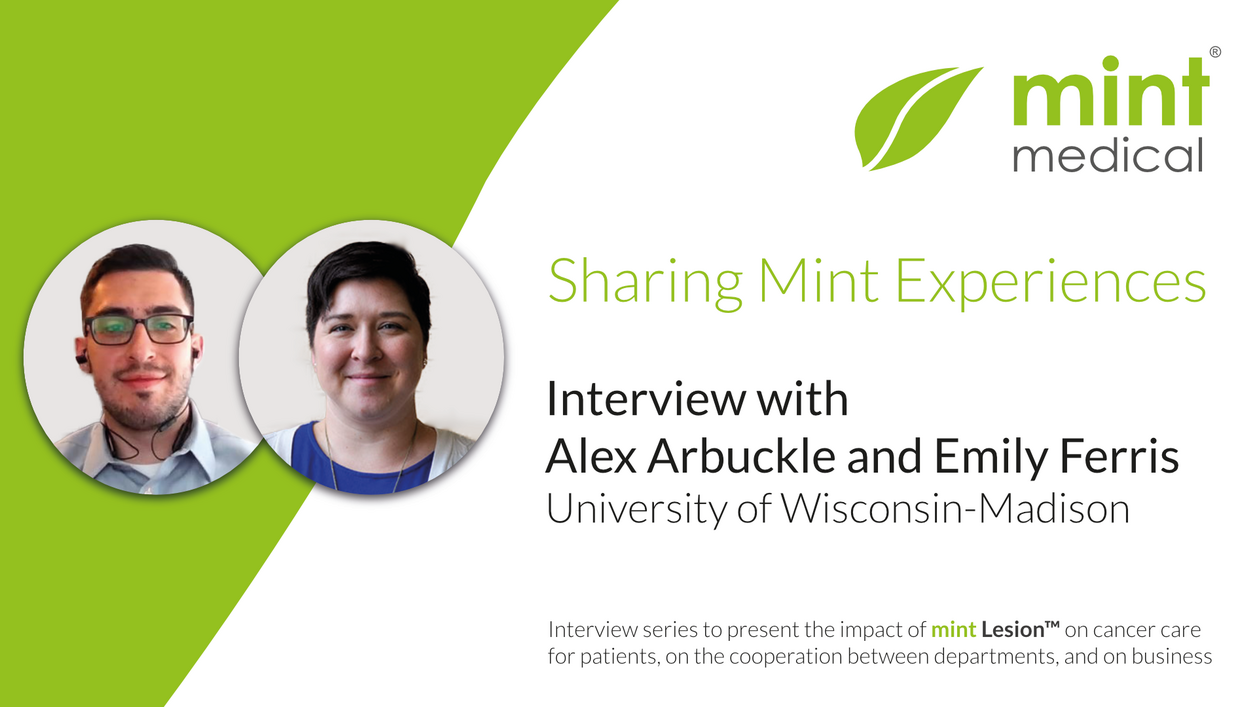
Enhancing flexibility and communication while saving costs and time in clinical trials
Related Resources
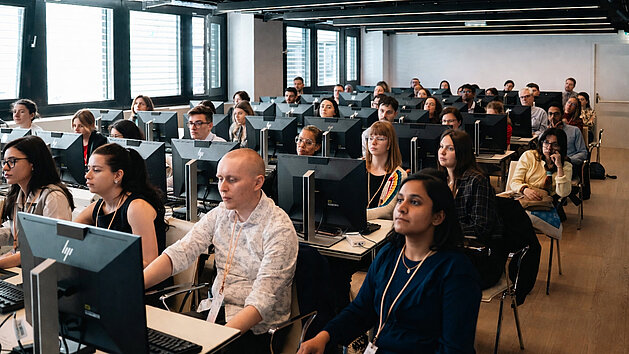
Hands-On Workshop Lung Cancer Screening: From Initial Read to Consenus
From initial read to consensus – structured reporting in practice at RÖKO 2026
Read more
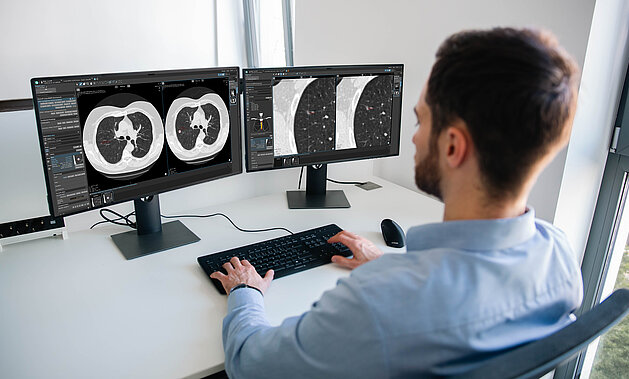
Lung Cancer Screening in Germany: How mint Lesion Supports Radiologists in Clinical Practice
A New Era of Early Detection — and New Challenges
With the introduction of the nationwide lung cancer screening program starting in 2026,…
Read more

From Theory to Practice: Hands-On RECIST Training at ECR 2026
This year, Mint Medical contributed to multiple program highlights at the ECR 2026 - bringing together innovation, education, and real-world clinical…
Read more