From Theory to Practice: Hands-On RECIST Training at ECR 2026
As part of the AI Tours alongside mediaire and contextflow, attendees explored how artificial intelligence is shaping the future of radiology. Participants were guided through different vendor solutions and experienced live demonstrations directly at the booths, bridging the gap between technology and clinical practice.
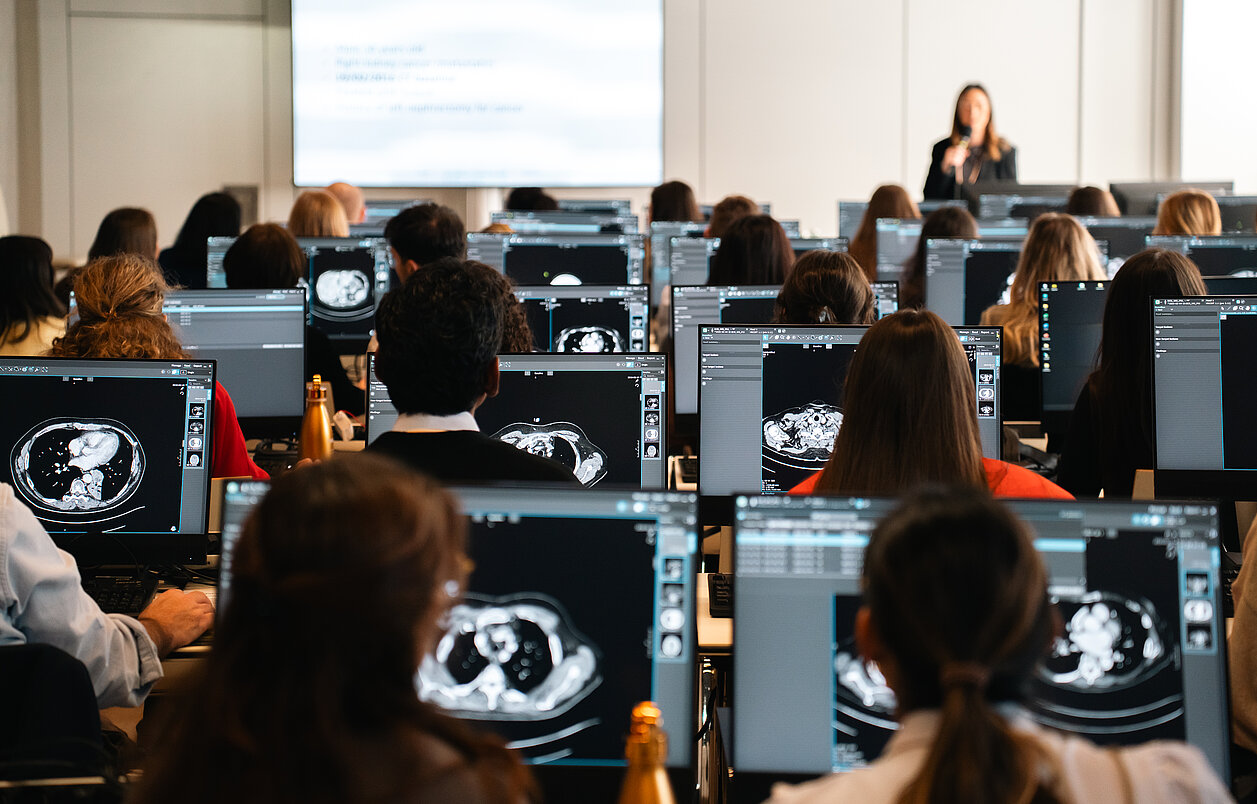
Beyond the exhibition floor, Mint Medical also supported one of the most in-demand educational formats of the congress: a hands-on RECIST workshop. By providing our software mint Lesion, participants were able to step into a realistic reporting environment.
Using mint Lesion, radiologists reviewed imaging data, selected target lesions, and completed full RECIST evaluations - mirroring real clinical workflows. This practical approach enabled both early-career and experienced radiologists to deepen their understanding of standardized tumor response assessment in a highly interactive setting.
Interview: Insights from Clinical Practice
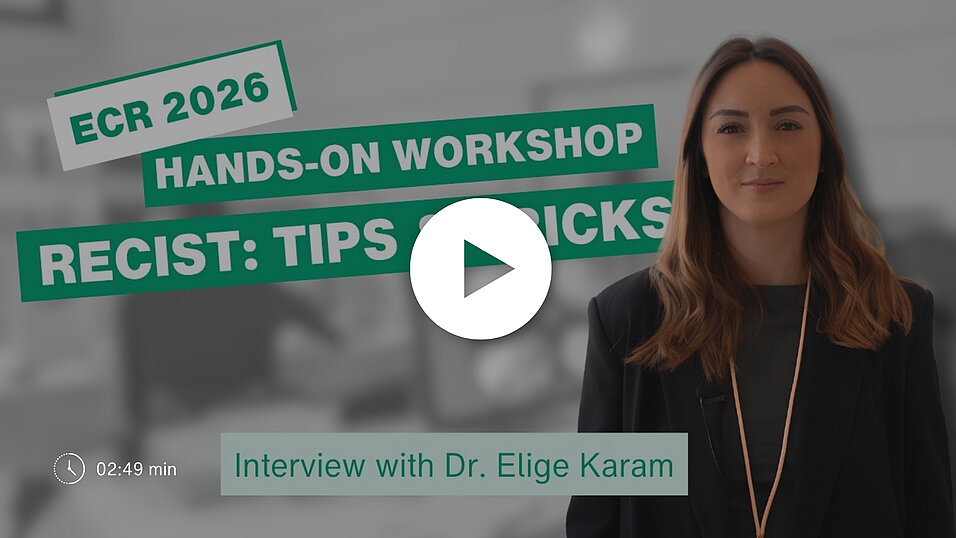
In this interview, Dr. Elige Karam, a radiologist at the Hôpital Européen Georges-Pompidou, Paris, shares her experience co-hosting the “RECIST Tips & Tricks” workshop together with Prof. Laure Fournier. Dr. Karam works work in oncologic imaging with a particular interest in digestive and urinary imaging.
What were your impressions of the ECR hands-on workshop “RECIST: Tips & Tricks”?
Together with Professor Laure Fournier, we organized a RECIST workshop “Tips and Tricks.” The workshop took place on two different days, Thursday and Friday. It was very dynamic and highly interactive.
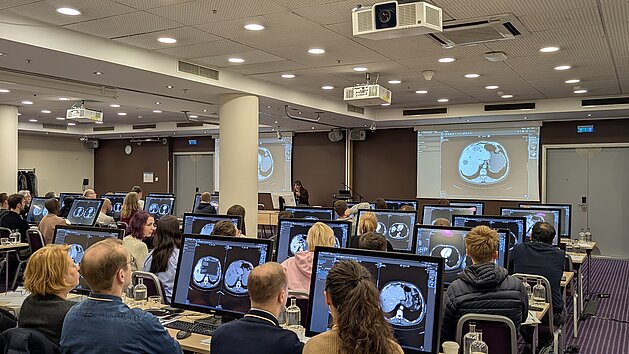
There were many radiologists, both young radiologists and experienced ones who had already worked with RECIST. The room was full, and there was a long waiting line for the workshop.
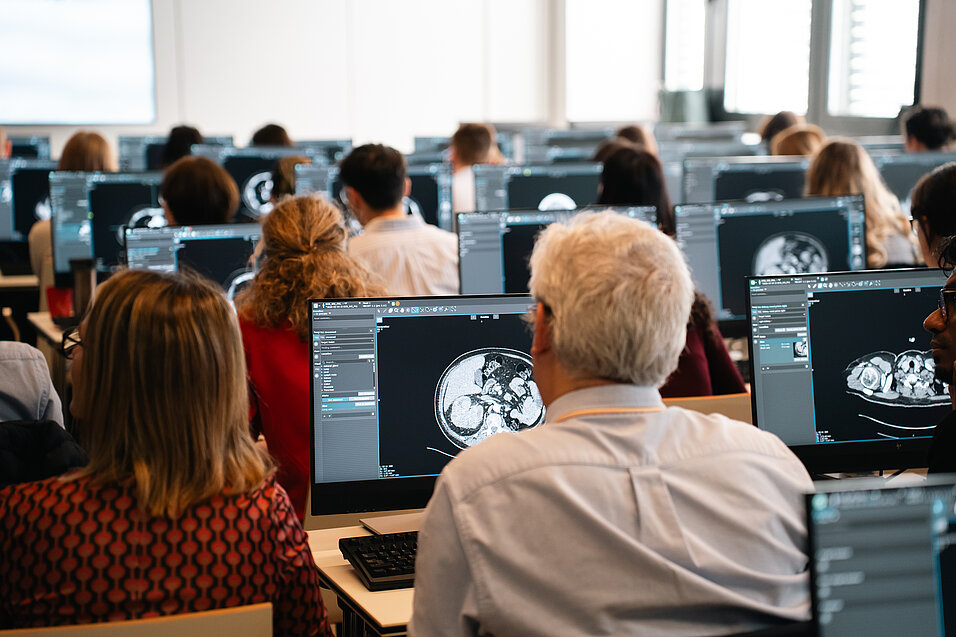
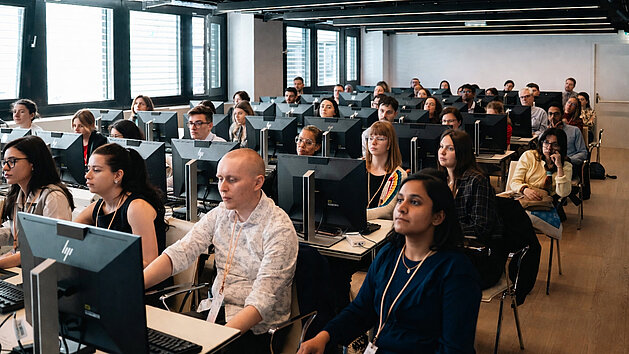
During the workshop, participants were sitting at work stations, and we showed them real-life cases. Using Mint Medical software, they were able to review scans, perform measurements, and complete a final RECIST evaluation.
What were the benefits for the participants?
RECIST can sometimes be difficult to grasp, especially for beginners. That’s why the workshop included different levels. We started with the basics: RECIST principles, measurements, selection of target lesions, and how to arrive at the final assessment.
The workshop was very interactive, and participants could ask questions throughout, both on theory and practice.
Did the workshop meet your expectations?
The interactivity was also supported by the fact that Mint provided multiple workstations similar to the PACS systems radiologists are used to. The room was provided by the ECR.
The fact that it resembled real-life practice helped participants better understand RECIST concepts.
If you would like to learn more about RECIST, I invite you to join a workshop we will hold in Riga, Latvia, in April. You can find more information on the ESOI website (European Society of Oncologic Imaging).
The workshop will take place at the end of April. We will teach the basics of RECIST and its variations such as Choi, mRECIST, and others. At the end, you will receive a certificate of participation. We look forward to seeing you there.
Why Hands-On Training Matters in Modern Radiology
Workshops like this highlight a key shift in radiology education: moving from passive learning to active, case-based training. Especially when it comes to frameworks like RECIST, which are essential for oncologic imaging and clinical trials, practical experience is critical.
Hands-on environments allow radiologists to:
- Apply theoretical knowledge directly to real cases
- Gain confidence in lesion selection and measurement
- Understand variability and standardization challenges
- Work within tools that reflect their daily reporting reality
By combining structured reporting with interactive learning, solutions like mint Lesion help translate guidelines into consistent clinical practice—supporting both quality and efficiency in oncologic imaging.
Looking Ahead
We are excited to continue supporting hands-on education in radiology.
📍 The next opportunity to join a practical training will be at the ESOI-EORTC Workshop in Riga, taking place from April 23 to 25, 2026.
Together with leading experts and organizations such as the European Society of Oncologic Imaging, we remain committed to advancing standardized, high-quality imaging - through technology, collaboration, and education.
Related Resources
Hands-On Workshop Lung Cancer Screening: From Initial Read to Consenus
ESOI-EORTC Workshop 2026 – Experience, Exchange, and Standardized Tumor Response Assessment in Radiology