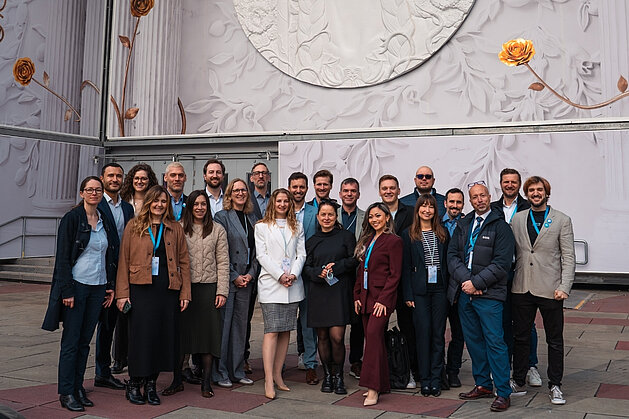
The ESOI–EORTC Workshop is one of the leading educational formats for radiologists focusing on the standardized assessment of tumor response. This year, the workshop took place once again, this time in Riga, Latvia, from April 23 to 25.
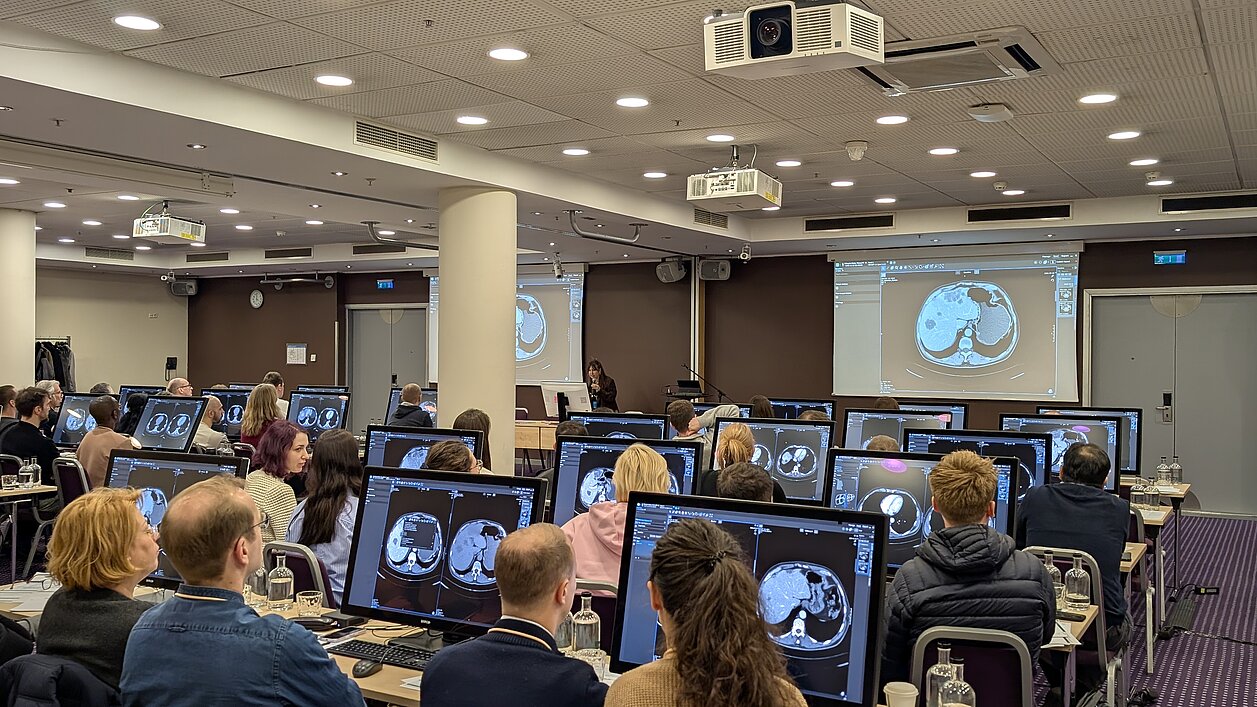
ESOI-EORTC Workshop 2026
Experience, Exchange, and Standardized Tumor Response Assessment in Radiology
Assessing treatment response is a core component of oncology - both in clinical routine and in clinical trials. At the same time, it presents radiologists with several challenges:
- Different interpretations of criteria such as RECIST
- Inter-reader variability
- Time-consuming manual processes
- Increasing demands driven by clinical trials
This is exactly where the workshop comes in: it creates an environment where knowledge, practice, and standardization come together.
Learning by Doing: Hands-On Instead of Theory
The ESOI–EORTC workshop is not a traditional lecture-based event. Instead, participants experience:
- Interactive case studies based on real-world oncologic imaging data
- Hands-on sessions where tumor response is assessed directly
- Discussions with experts from radiology and clinical research
- A deep understanding of RECIST 1.1 and beyond
The goal: radiologists should not only understand the criteria, but be able to apply them confidently and consistently.
“The ESOI–EORTC Workshop is truly a great enrichment for training in RECIST criteria. It provides an opportunity to review cases in a genuinely hands-on way and to go through them together with the participants. This often leads to many questions in the practical application of the RECIST criteria […] but that is exactly why the interaction with participants—of which there is plenty of room in the workshop—is so important.” (Prof. Dr. Wolfgang Kunz, organizer)
Standardized Assessment – Across Europe and Beyond
A key theme running through all workshop experiences is the importance of standardization:
- Comparability of findings across institutions
- Higher quality in clinical trials
- Reproducible results for research and treatment decisions
The workshops clearly demonstrate: standardized processes are the foundation of reliable medical decision-making.
„The main purpose of these workshops is to foster consistent application and interpretation of the criteria across Europe and beyond, as well as to bring the whole radiology community dealing with cancer imaging to the expected level of quality.” (Prof. Dr. Laure Fournier, organizer)
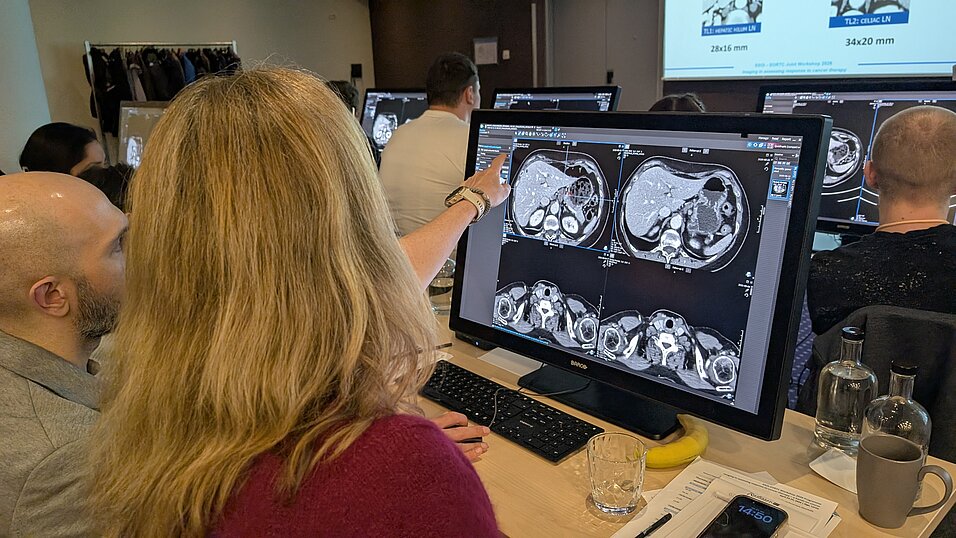
Voices from the Workshop: What Participants Take Away
Participants consistently highlight three key benefits:
- Confidence in applying response criteria
Practical exercises turn theory into routine. - Peer-to-peer exchange
Direct interaction with international experts opens up new perspectives. - Relevance for everyday practice
The content can be directly applied to clinical work and clinical trials.
“In addition to providing an opportunity to practice on easier, simpler cases, we were exposed to challenging, complex cases. I thoroughly enjoyed the 'beyond RECIST' assessments with modified, immune responses and Lugano assessments. The examples were demonstrable, which assisted in solidifying concepts. From basic concepts such as the RECIST rules or criterion to HOW to measure and lesion selection were well encompassed.” (Dr. Liam Lorentz, former participant)
mint Lesion in the Workshop: Where Technology Meets Clinical Expertise
A recurring element of the workshops is the use of mint Lesion—a software solution for structured reporting and standardized assessment.
The platform supports radiologists in:
- Structuring the documentation of treatment response
- Performing RECIST-compliant evaluations efficiently
- Integrating imaging and clinical data into a unified analysis
- Consistently meeting clinical trial requirements
“By the second practical session/workshop, I was comfortable with the bulk of the functionality. Certainly, by lunch, I could perform the relevant assessments that were required. The tips, tricks, and keyboard shortcuts I have learned while practicing cases. They were easy to learn and navigate. For lesion assessment and follow-up comparison, the software was intuitive and robust.” (Dr. Liam Lorentz, former participant)
From Training to Clinical Trials
One of the key objectives of the ESOI–EORTC workshop is to prepare participants for work in clinical trials.
Participants have the opportunity to:
- Obtain a RECIST 1.1 certification
- Work as independent imaging reviewers
- Actively contribute to international studies
In this way, the workshop bridges the gap between education and real-world application in research.
“This course is aimed at those radiologists who already have a basic knowledge of response criteria but do not yet feel so confident in their use and would like to delve deeper into the topic to gain more confidence, as well as those who are considering becoming leaders in clinical trials.” (Dr. Melvin D’Anastasi, organizer)
Why these workshops remain relevant?
The demands placed on radiologists continue to grow: more clinical trials, more complex therapies, and increasing volumes of data. Workshops like this play a crucial role in ensuring quality, establishing standards, and meaningfully integrating technology into clinical workflows.
Conclusion: A Workshop That Shapes Radiology
The ESOI–EORTC workshop is more than just a training course. It is a place where knowledge is applied in practice, standards are developed collaboratively, and radiology and research come closer together. For radiologists working in oncology or clinical research, it is a key building block for the future.
For us at Mint Medical, this workshop was once again a truly valuable experience. We would like to thank the organizers G. Cappello (Torino, IT), M. D’Anastasi (Msida, MT), L. Fournier (Paris, FR), and W. Kunz (Munich, DE) for making this event possible. We are already looking forward to supporting this outstanding workshop again next year.
We'd like to offer workshops that truly matter to you. Please take a few minutes to complete our survey and help us shape future learning opportunities.
Related Resources
Webinar Series: Lung Cancer Screening in Germany - From Evidence to Implementation
Lung cancer remains one of the leading causes of cancer-related mortality worldwide. In Germany, the introduction of a national lung cancer screening…
Read more
From PCWG3 to PCWG4: Evolving Standards in Prostate Cancer Clinical Trials
The Prostate Cancer Working Group 4 (PCWG4) updates and extends the recommendations of PCWG3 to reflect a patient-centric approach, the emergence of…
Read more
Mint Medical and mediaire strengthen the prostate cancer care pathway with AI-Powered MRI Solutions
Mint Medical, a Snke company, and mediaire announce a collaboration to advance AI‑powered MRI workflows through the interoperability of mint Lesion…
Read more